
A two-piece wedding dress gives a bride more freedom to build a look around her body, venue and personal style. Instead of one complete gown, the outfit combines separate pieces such as a bridal top, corset, skirt or tailored trousers.
The result can feel romantic, modern or softly bohemian. The main rule is that both pieces should look intentionally designed together, not like two unrelated white garments.

What is a two-piece wedding dress?
A two-piece wedding dress is made from separate upper and lower pieces. Common combinations include a corset with a full skirt, a lace top with an A-line skirt, a cropped blouse with a high-waisted skirt or a structured top with bridal trousers.
Some sets show a small section of the waist, while others overlap and resemble a traditional gown. The amount of separation should match the bride’s comfort and ceremony formality.
Why brides choose bridal separates
Bridal separates offer flexibility. A bride can wear a fitted top with a flowing skirt, add sleeves for the ceremony or replace the skirt with trousers for the reception.
They can also be easier to restyle later. A satin skirt, lace top or tailored bridal jacket may be worn again instead of remaining part of a single-use gown.
Similar ivory tones, compatible fabrics and balanced proportions help the outfit feel polished.
Best two-piece wedding dress combinations
A corset top with an A-line or ball gown skirt creates a structured, romantic silhouette. It gives bodice support while keeping movement and ceremony drama in the skirt.
A lace top with a simple satin or crepe skirt feels softer and more relaxed. This combination suits garden weddings and brides who like handmade-looking detail.
A minimalist top with tailored trousers creates a clean city look. It can work for a civil ceremony or reception, especially with a veil, cape or refined jewelry.
How to make bridal separates look cohesive
Compare the pieces in the same lighting. Two fabrics described as ivory may still have different undertones, and the difference can become more visible in photographs.
Check where the top ends and the skirt begins. The meeting point should feel deliberate and flattering. A high waist can lengthen the legs, while a longer corset can create a smoother torso.
Fabric weight matters too. A delicate top may look unbalanced with a heavy skirt unless a shared trim or texture connects them.
What to check during the fitting
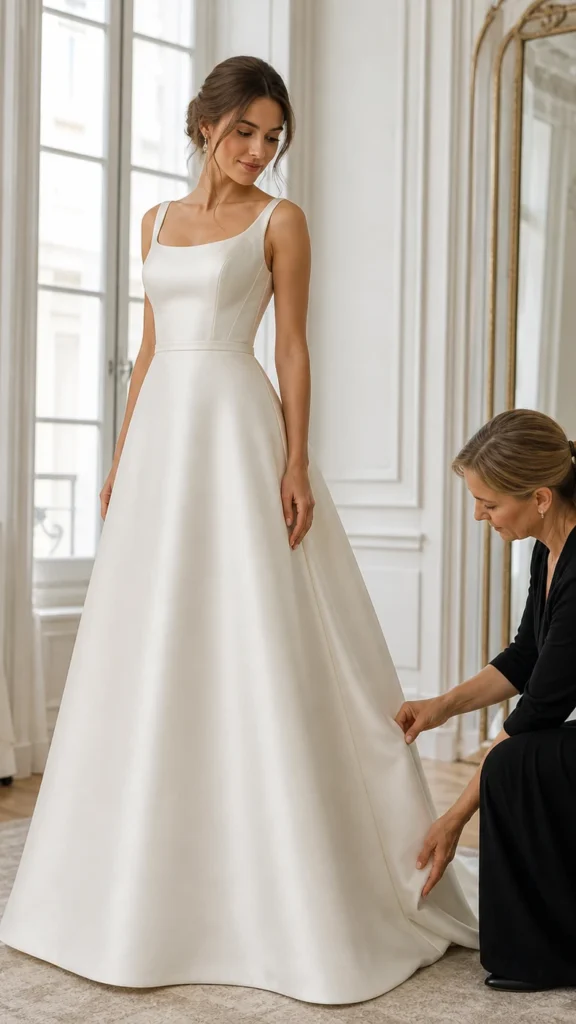
Raise your arms, sit, walk and turn while wearing both pieces together. The top should stay secure, and the skirt waistband should not twist, slip or create an unwanted gap.
If the top is cropped, check the outfit from the front, side and back. Movement can reveal more skin than expected.
Ask whether hidden snaps, hooks or small loops can connect the pieces and keep them aligned.
How to style a two-piece wedding dress with a veil
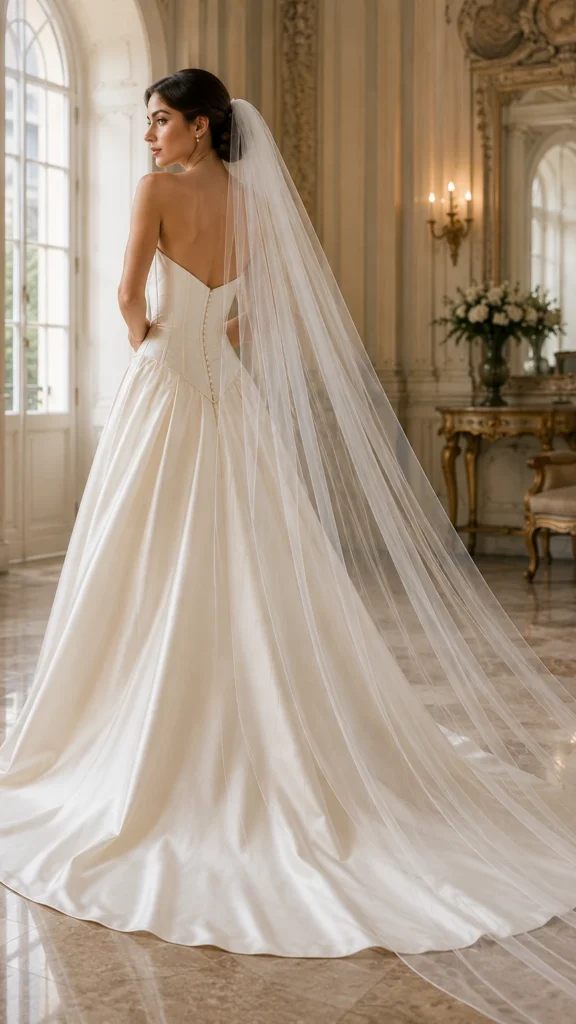
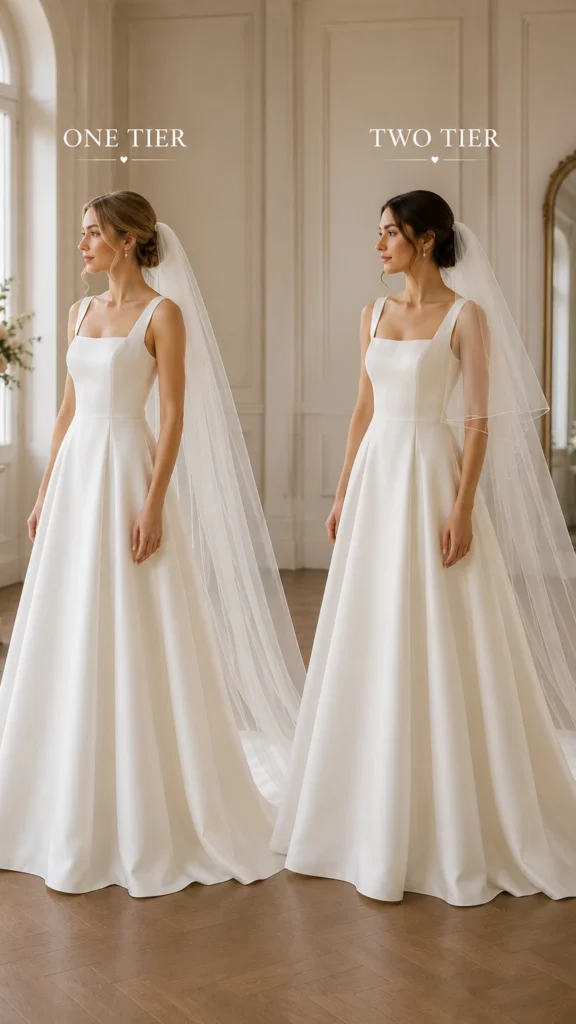
A plain tulle veil works well when the separates already include lace, embroidery or a strong corset shape. It adds ceremony softness without another competing texture.
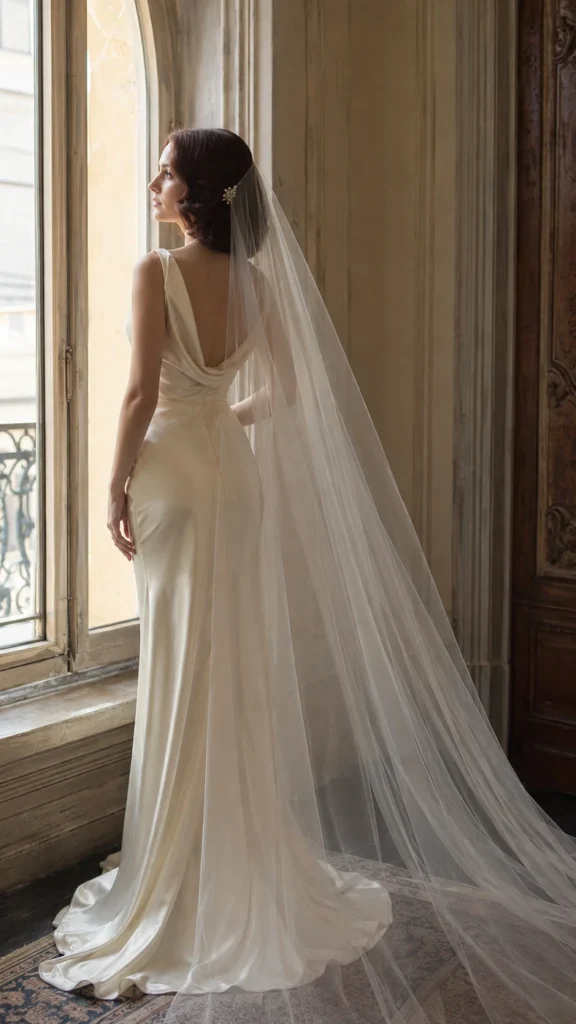
If the bridal set is minimal, a pearl veil, lace edge veil or floral embroidered veil can add romance. The veil should support the outfit rather than hide the join between the pieces.

Shoes and accessories
Choose shoes before the final skirt alteration so the hem falls correctly. Delicate heels or clean pumps suit a flowing skirt, while pointed shoes can extend the leg line with trousers.
Keep jewelry simple when the top is heavily detailed. With a clean satin set, earrings, gloves, a bridal scarf or decorative hair accessory may become the main accent.
Final tip
Choose a two-piece wedding dress when you want flexibility, personal styling and the possibility of changing the outfit during the day.
The best bridal separates feel connected through color, proportion and fabric. At WonderBridalAtelier, every piece should support the same story so the final look feels intentional, elegant and unmistakably bridal.



Leave a comment