
Choose with confidence
One guide for veil colour, veil length and bridal measurements
Use this page before ordering to compare white, off-white and ivory, decide how long you want the veil to fall, and take the measurements needed for a wedding dress or custom bridal piece.
You do not need to solve every detail alone. If two shades look close or a measurement does not match the chart, contact us before choosing.

Choosing the base shade
Start with the dress, not the colour name
The best veil shade is usually the one that sits quietly beside the dress. It does not have to carry exactly the same name.
Compare the tulle against the dress fabric in daylight, ideally near the neckline or train. Look for the undertone first: cool, neutral or warm.
White
A cool, bright starting point for dresses described as pure white or bright white.
Off-white
A softer neutral shade, often also called light ivory or soft white. It avoids a sharp white contrast against many modern ivory gowns.
Ivory
A warmer cream-toned option for dresses with a clearly warm ivory base. It may look too warm beside a cool white gown.
Pearl veil colour
Judge the tulle first, then the pearls
Pearls catch highlights and can make two similar base shades look farther apart in a photograph.
Choose the tulle that works with the dress, then look at how the pearls sit against that base. The embellishment should add light without creating an obvious colour break.
If you are choosing between two shades, compare an unfiltered daylight photo of the dress with the veil image. A fabric swatch is even more useful when one is available.

Choosing veil size
Choose the finish point, then measure from the comb
Veil names are useful shorthand, but the centimetre length on the product matters more. A fingertip veil will finish differently depending on your height and where the comb sits.

How to measure veil length
- Choose the comb position. Decide whether the veil will sit at the crown, high at the back or lower near the bun.
- Wear the planned shoes. Heel height changes the finish point of long veils.
- Follow the line of the body and dress. Run a soft tape from the comb position down the back to the point where you want the veil to end.
- Compare it with the train. For chapel or cathedral styles, decide whether the veil should finish before, with or beyond the dress train.
Shoulder and elbow
Light, practical lengths that keep the dress train visible.
Fingertip and ballet
More movement without extending far behind the dress.
Waltz and chapel
Longer coverage with a softer floor-level finish.
Cathedral and royal
A formal trailing effect designed to extend beyond the gown.
Wedding dress measurements
Measure the body you have, not the size you expect
Use a soft measuring tape, wear the undergarments planned for the dress and ask another person to help. Keep the tape level and comfortably close to the body without pulling it tight.
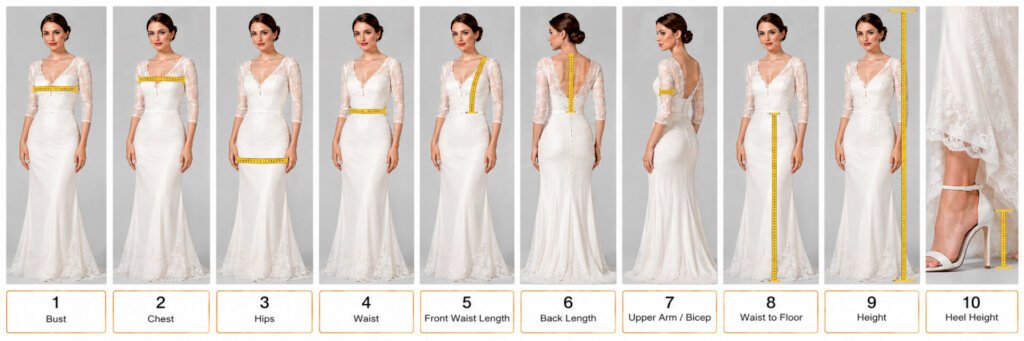
- BustMeasure around the fullest part of the bust, keeping the tape level across the back.
- Upper chestMeasure above the bust from one armpit area to the other without including the fullest point.
- Natural waistUse the narrowest part of the torso or the crease formed when you bend gently to one side.
- HipsStand with feet together and measure around the fullest part of the hips and seat.
- Front waist lengthMeasure from the shoulder line over the fullest part of the bust to the natural waist.
- Back waist lengthMeasure from the nape of the neck down the centre back to the natural waist.
- Upper armMeasure around the fullest part of the upper arm without squeezing the tape.
- Waist to floorStand straight and measure from the natural waist to the floor without shoes.
- Full heightMeasure from the top of the head to the floor while standing straight without shoes.
- Heel heightMeasure the shoes from the bottom of the heel to the point where the heel meets the shoe.

Using the size chart
The number on the label is only a starting point
Choose by your actual bust, waist and hip measurements rather than the everyday clothing size in your wardrobe.
If a product listing includes its own size chart, use that chart first. If your measurements fall across different sizes or the piece is fitted, contact us before ordering.
- Record the unit clearly: centimetres or inches
- Measure twice and compare the two results
- Do not pull the tape tight to reach a smaller size
- Keep the final numbers with your order notes
Common questions
Before you choose
Does the veil have to match the dress exactly?
A close undertone match matters more than an identical colour name. Supplier names vary, so compare the fabric itself whenever possible.
How do I know which veil length will suit my dress?
Decide where you want the veil to finish, then measure from the planned comb position while wearing shoes with a similar heel height.
What should I do if I am between dress sizes?
Use the product-specific chart and contact us with your bust, waist and hip measurements before choosing. Do not select only by your usual clothing size.
Can you help me compare white, off-white and ivory?
Yes. Send a daylight dress photo, the designer’s colour wording and a link to the veil you like. Screen images are helpful, but they are not an exact fabric swatch.
Still unsure?
Check the details before you order
Send the dress photo, colour name, measurements and the product link. A short message now can prevent the wrong shade, length or size later.