
An ivory wedding veil can look beautifully soft and natural with a warm bridal gown, but choosing the correct shade is not always as simple as selecting “ivory” from a menu.
Wedding dresses may be described as pure white, natural white, light ivory, off-white, champagne or blush ivory. The transparency of the tulle, the dress fabric and the ceremony lighting can all influence how the final color appears.

What is an ivory wedding veil?
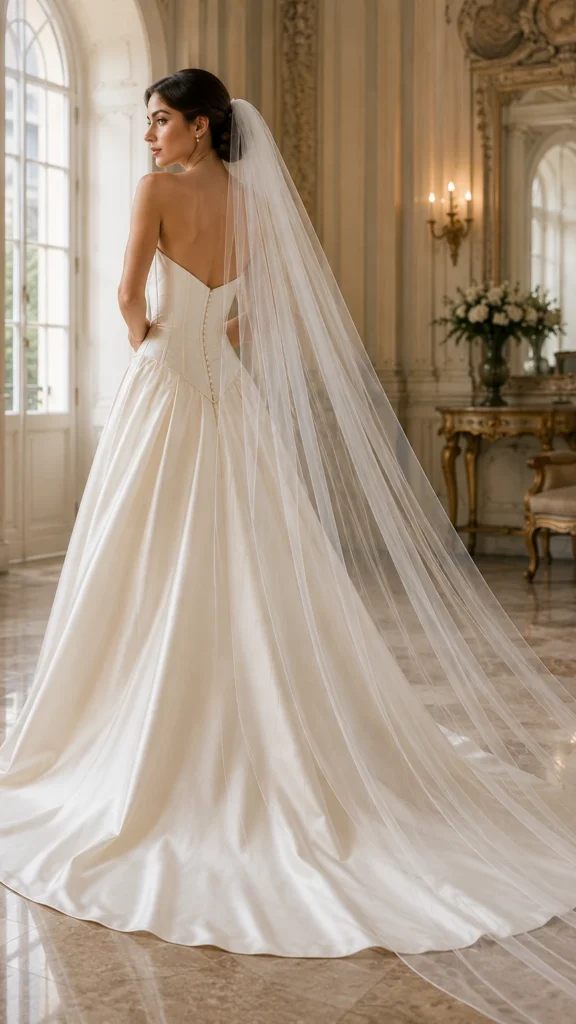
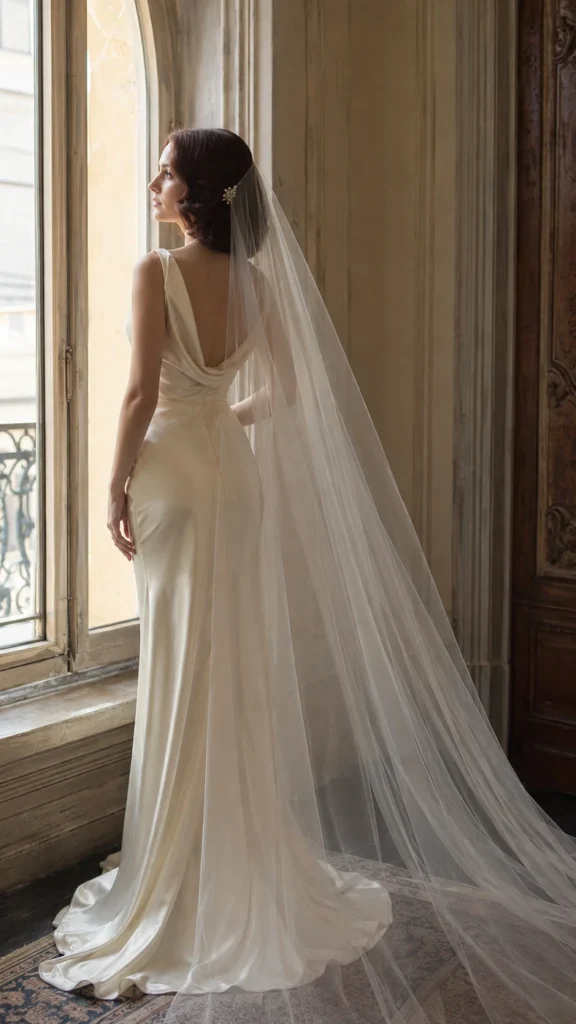
An ivory wedding veil has a softer and slightly warmer appearance than a bright white veil. The difference may be very subtle, especially when the veil is made from one layer of fine transparent tulle.
Ivory does not necessarily mean yellow or cream. A well-matched light ivory veil can still appear white in photographs while blending more naturally with the warm undertones of the dress.
White vs ivory wedding veil
Pure white is the brightest and coolest option. It usually works best with a genuinely white dress rather than a gown that is only described as white in casual conversation.
Ivory is warmer and usually complements modern bridal gowns made from satin, mikado, crepe, chiffon and lace. Many dresses that appear white in photographs are officially labelled ivory by the designer.
When a bright white veil is placed beside a warm ivory dress, the veil may look slightly blue or unusually bright. A very warm veil beside a cool white dress may look creamier than expected.
Light ivory, off-white and natural white
Light ivory is a popular middle option. It has enough warmth to coordinate with most ivory gowns but remains pale and bridal.
Natural white usually sits between pure white and ivory. Off-white is a broader term and may describe anything from soft natural white to a warmer ivory shade.
Because manufacturers use these names differently, the product name alone cannot guarantee a perfect match.
How to match an ivory wedding veil to your dress
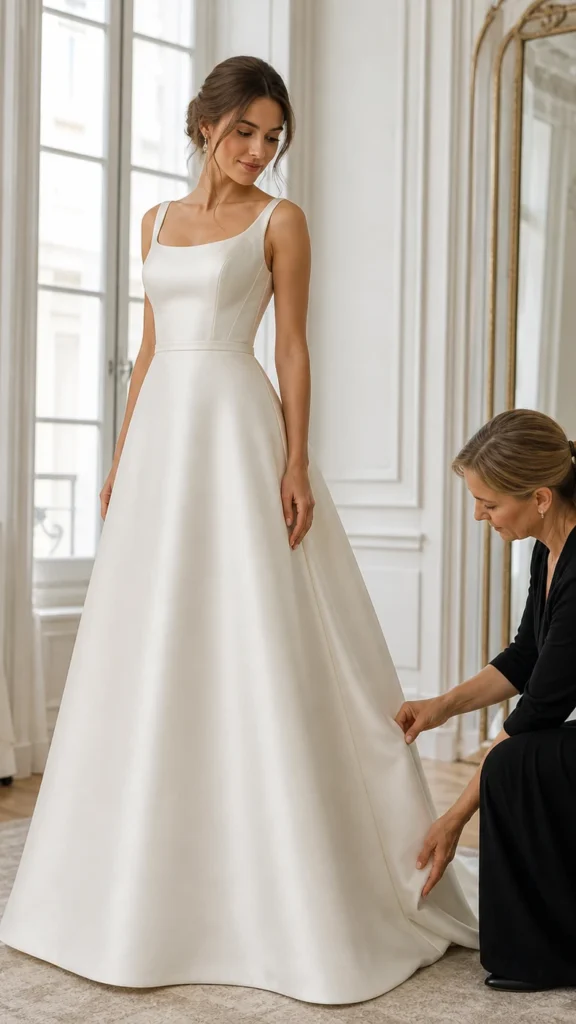
Compare the veil with the actual wedding dress whenever possible. A fabric swatch from the dress salon is more reliable than a photograph taken on a phone.
Hold the tulle against the bodice, skirt and lining. The same veil can appear different over transparent lace, solid satin and a darker nude lining.
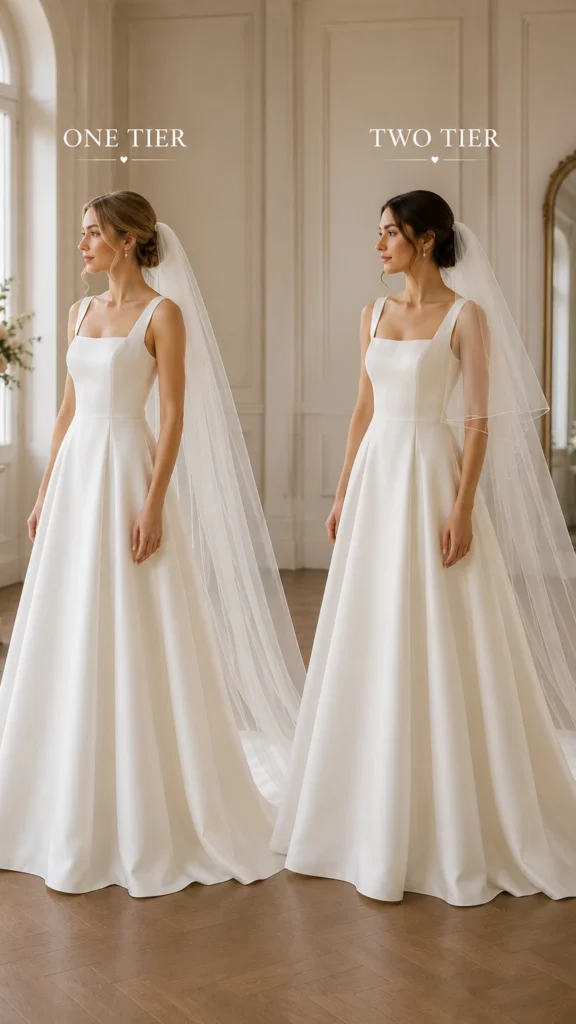
Look at several layers together. One layer of light ivory tulle may appear almost colorless, while gathered fabric around the comb or a two-tier construction will reveal more of its undertone.
Check the veil in natural daylight
Warm indoor lighting can make both white and ivory fabrics look more yellow. Cool showroom lighting can make an ivory dress appear whiter than it really is.
Check the dress and veil near a window during the day. Take photographs from the front and back, both with and without flash, because the camera may reveal a difference that is difficult to see in person.
Does the dress fabric affect the color?
Yes. Matte crepe tends to display color differently from reflective satin or mikado. Lace may appear lighter because of the open pattern, while a champagne or nude lining can make an ivory overlay look warmer.
The veil does not need to match every visible part of the gown. It should coordinate mainly with the overall shade rather than with isolated beads, lace threads or lining details.
Can you wear a white veil with an ivory dress?
A soft white or natural white veil may work with a very pale ivory dress, especially when the tulle is transparent and lightly gathered.
A stark white veil is riskier because its cooler appearance may contrast with the warmer dress. Compare the fabrics directly before deciding rather than relying on the color names alone.
Choose the decoration as well as the tulle color
Lace, embroidery, pearls and floral appliqués may be more opaque than the tulle and can make a color difference more visible.
For a warm ivory dress, choose ivory embroidery and appliqués rather than bright white decoration. Colorful flowers can work with either shade when the underlying tulle remains harmonious with the gown.
The Colorful Wildflower Cathedral Veil in Light Ivory combines a warm sheer base with botanical flower details for brides who want visible color without losing the traditional ivory bridal effect.
Ivory wedding veil buying checklist
Before ordering, confirm the exact veil color, tulle type, number of layers, gathering, decoration color, edge finish and return or exchange conditions.
Send the seller a clear daylight photograph or fabric swatch when color guidance is available. Avoid judging the dress from a heavily edited product photograph.

Find the right veil shade
The safest choice is usually a veil that looks slightly transparent and harmonious rather than one that attempts to reproduce the solid dress color exactly.
Explore the bridal veil collection at WonderBridalAtelier and compare light ivory floral, lace, blusher and cathedral designs for different wedding dresses.
The right ivory wedding veil should soften the bridal silhouette, preserve the details of the gown and look naturally connected to the dress in daylight, ceremony lighting and photographs.



Leave a comment