
A ruffle wedding veil adds dimension through shape rather than heavy embellishment. Soft frilled edges can move beautifully around the bride, turning simple tulle into a more expressive bridal accessory while keeping the overall look light.
The key is balance. Because ruffles already create visual volume, veil width, dress shape and gathering should work together rather than compete.

1. Let the Ruffle Become the Main Detail
A ruffled edge naturally attracts attention, especially when it continues around a long chapel or cathedral veil. If the veil has a strong sculptural border, you may not need additional pearls, crystals or dense embroidery.
This can be particularly effective with clean satin, crepe and mikado wedding dresses.
2. Pair Ruffles With a Minimalist Dress
A simple gown gives a textured veil enough visual space to stand out. Smooth fabrics and clean bodices create contrast with the soft movement of a frilled tulle edge.
If your dress already has large flowers, bows, dramatic sleeves or layered ruffles, choose a quieter veil so the complete look does not become overly busy.
3. Choose the Ruffle Size Carefully
Not every ruffle needs to be dramatic. A narrow softly gathered edge creates subtle movement, while a deeper ruffle becomes a stronger fashion statement.
Petite brides or narrow gowns may feel more balanced with a smaller edge. Fuller A-line and ball-gown silhouettes can visually support a wider ruffle.
4. Cathedral Length Creates Maximum Movement
A cathedral ruffle veil gives the edge enough space to form graceful curves around the train. As the bride walks, the border moves independently from the centre of the tulle, creating a particularly photogenic effect.
Compare the veil with the dress train before ordering. A long statement veil normally looks best when it clearly extends beyond the gown.
5. Control Gathering at the Comb
Ruffles already introduce volume around the veil perimeter, so excessive gathering at the comb may make the upper silhouette unnecessarily full.
Light or moderate gathering keeps the hairstyle and shoulders cleaner while allowing the decorative edge to provide the movement.
6. Consider a Blusher Carefully
A ruffle veil can include a face-covering layer, but think about where the textured edge will sit when the blusher is lowered and lifted.
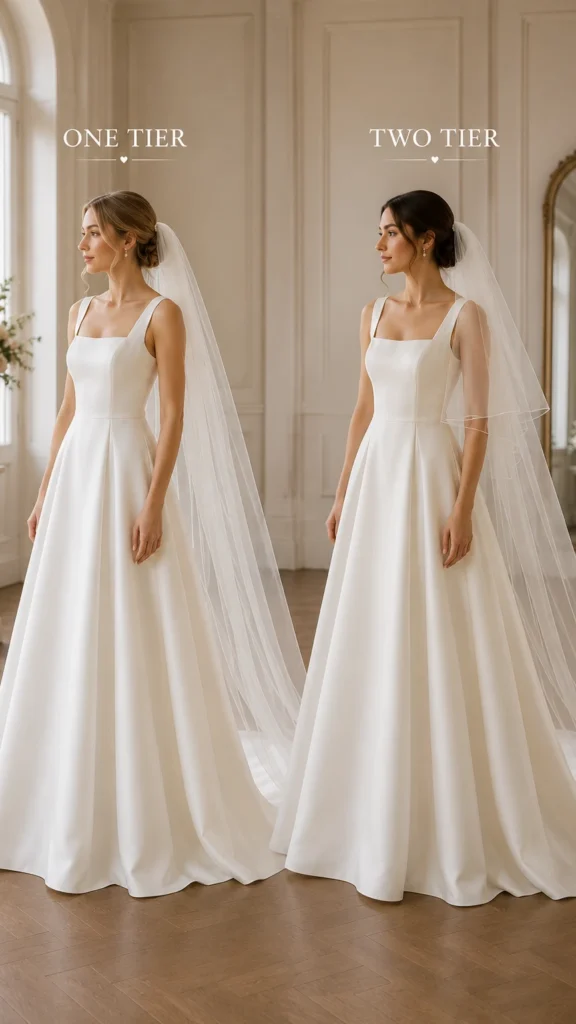
A softer, narrower ruffle near the face is generally easier to manage than a very deep frill. If you prefer a traditional ceremony reveal, compare this construction with the Cathedral Wedding Veil with Blusher and Satin Ribbon Edge to understand how a structured edge and two-tier construction change the silhouette.
7. Think About the Venue
Ruffles look especially beautiful where there is room for the veil to move: church aisles, hotel staircases, ballrooms and outdoor terraces all provide space for a longer textured train.
For a smaller civil ceremony, a fingertip or waltz-length ruffle veil can create the same effect with less fabric to manage.

Best Dresses for a Ruffle Wedding Veil
- Minimal satin gown: lets the textured edge become the focal point.
- Clean corset dress: balances structure with soft movement.
- Simple A-line gown: works with narrow or medium ruffles.
- Ball gown: can support a wider, more dramatic edge.
- Short wedding dress: pair with a shorter ruffle veil for a playful modern look.
Ruffle Veil Checklist
- Choose the ruffle width according to your dress.
- Keep other veil decoration controlled.
- Compare veil width with skirt volume.
- Check gathering at the comb.
- Compare the veil and dress train lengths.
- Test how the ruffle moves while walking.
See more current styling directions in the WonderBridalAtelier Wedding Veil Trends 2026 guide, or explore the bridal veil collection for cathedral, floral, pearl, lace and other statement styles.
A ruffle wedding veil works best when texture is treated as the design itself. Choose the scale carefully, keep the rest of the look balanced and let the moving edge create the drama.
Visit WonderBridalAtelier on Etsy




Leave a comment