
Length is not the only decision to make when choosing a veil. Comparing a one tier vs two tier wedding veil can completely change the way the tulle frames your face, shoulders, hairstyle and wedding dress.
A single-layer veil creates a clean, uninterrupted fall behind the bride. A two-tier veil adds a shorter second layer, usually designed as a blusher that can cover the face during the ceremony or be swept back for additional fullness.
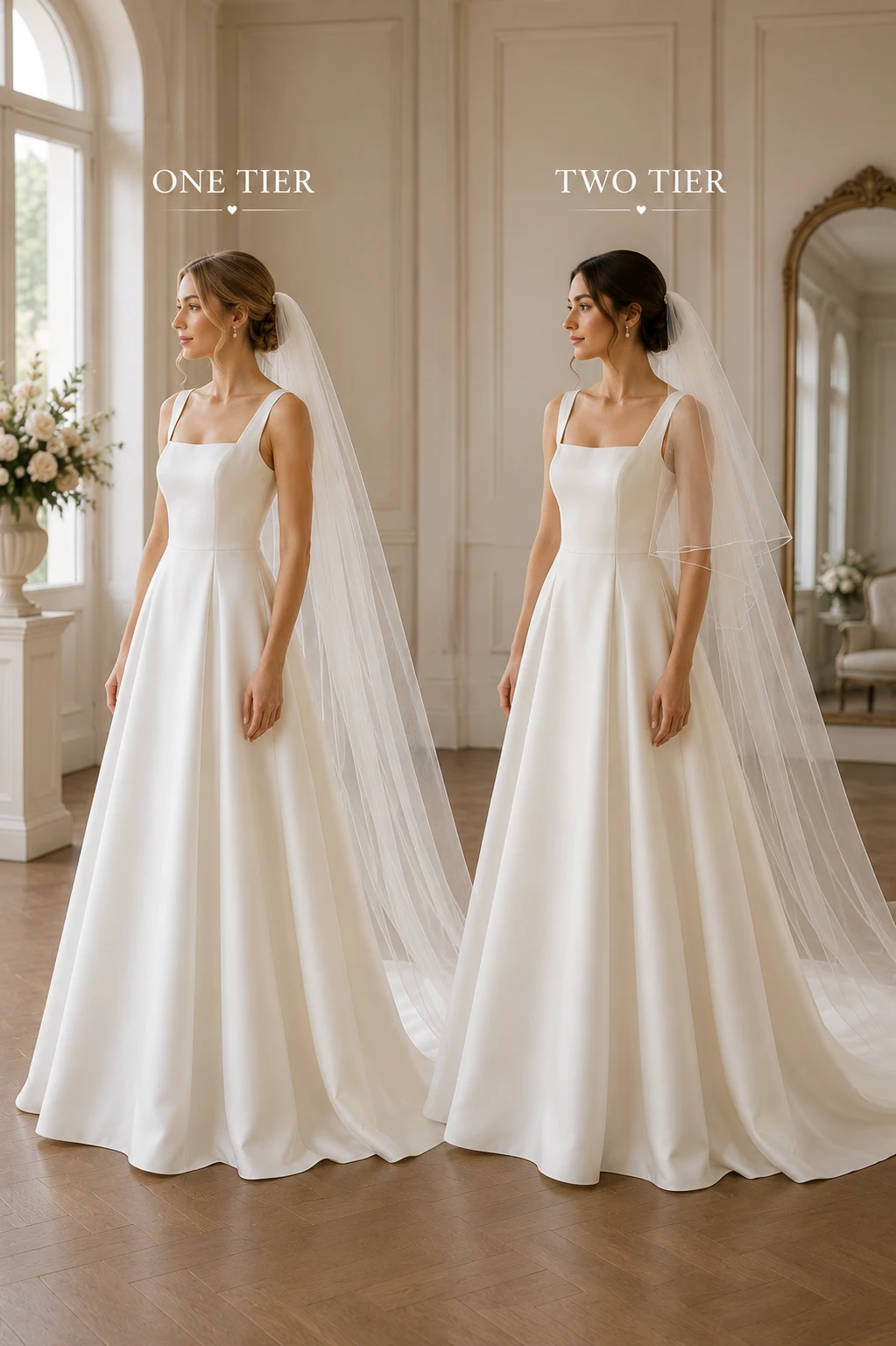
1. One Tier Creates a Cleaner Silhouette
A one-tier wedding veil consists of one main layer falling from the attachment point behind the bride. Because there is no shorter front layer, the face remains uncovered and the overall silhouette usually feels lighter.
This style works especially well when you want the neckline, sleeves or back of the wedding dress to remain highly visible.
2. Two Tier Adds a Traditional Blusher
A two-tier wedding veil includes a shorter layer in addition to the main back veil. The shorter section can be worn over the face while walking down the aisle and lifted during the ceremony.
After the blusher is lifted, it falls behind the bride and creates an additional layer around the head and shoulders.
3. Consider How Much Fullness You Want
Even when both veils use the same soft tulle, two layers naturally create more visual volume than one. This is most noticeable close to the comb and wherever the layers overlap.
If your dress has dramatic sleeves, a heavily embellished bodice or an intricate back, a one-tier veil can keep the upper silhouette cleaner. With a minimalist gown, the extra softness of two tiers can create beautiful balance.
4. Think About the Ceremony Moment
The blusher is not simply decorative. For brides who want the traditional moment of entering with the face covered and then lifting the veil, a two-tier design provides this option naturally.
If you already know that you do not want anything covering your face, a single-layer veil may be the simpler choice.
5. Check How the Layers Affect Transparency
Fine bridal tulle is transparent, but overlapping layers appear more visible than a single layer. A two-tier veil therefore creates slightly more coverage around the shoulders and upper back.
This matters when your gown has buttons, lace, corset construction or an open back that you particularly want to show in photographs.
6. Match the Veil to Your Hairstyle
A one-tier veil attached below a low bun creates a sleek, downward fall. Higher placement can introduce more volume even without adding another layer.
With a two-tier veil, the shorter section already adds fullness, so comb placement becomes even more important. Test the veil with your actual bridal hairstyle rather than choosing the position separately.
7. Choose Length Independently From Layers
One tier does not automatically mean short, and two tiers do not automatically mean cathedral length. Both constructions can work at different lengths depending on the design.
Choose the main veil length according to the dress silhouette and train first. Then decide whether a blusher and additional layer improve the complete bridal look.
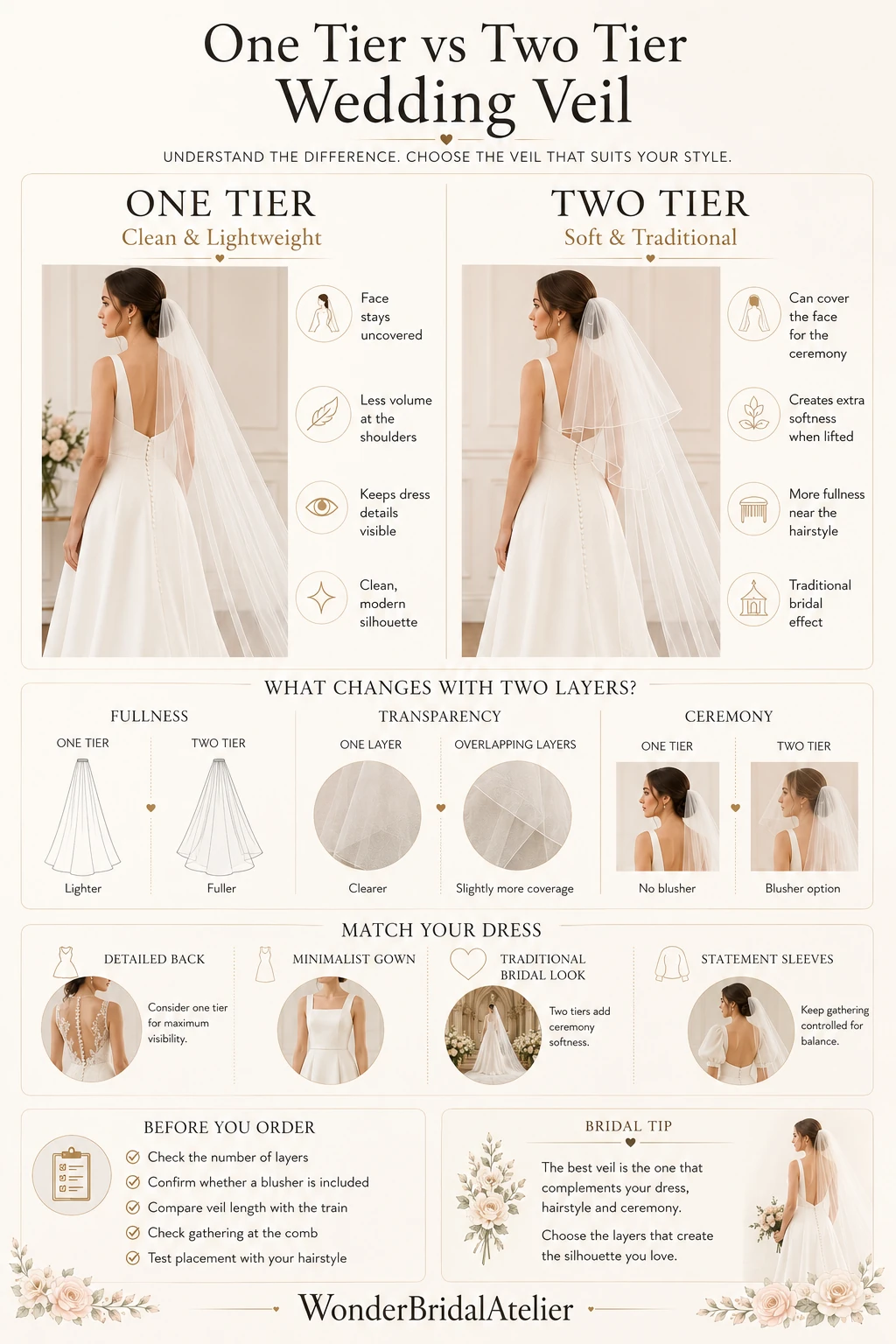
One Tier vs Two Tier Wedding Veil: Quick Comparison
- One tier: cleaner silhouette, less upper-body volume and maximum dress visibility.
- Two tier: includes an additional shorter layer and can create a traditional blusher moment.
- Minimalist dress: either option works; two tiers can introduce extra softness.
- Detailed back: a sheer one-tier veil can keep the design easier to see.
- Traditional ceremony: choose two tiers when you want the face-covering blusher option.
What Should You Check Before Ordering?
- Confirm whether the listing is one layer or two.
- Check whether the shorter layer is designed as a blusher.
- Compare the main veil length with your dress train.
- Consider how much gathering you want around the comb.
- Decide how much of the neckline and back should remain visible.
- Test the veil with your planned hairstyle.
Choosing Your Bridal Veil
If you love a traditional ceremony reveal, the Pearl Wedding Veil with Blusher is a two-layer option with a face-covering front layer. For other silhouettes and finishes, explore the WonderBridalAtelier bridal veil collection.
The best choice between a one tier and two tier wedding veil is not simply about tradition. Consider the dress, hairstyle, ceremony and amount of fullness you want. When those elements work together, the number of layers feels like a natural part of the complete bridal look.
Visit WonderBridalAtelier on Etsy




Leave a comment