
Choosing a wedding veil for a beach wedding requires a slightly different approach from choosing one for a ballroom, church or indoor venue. Wind, sand, humidity and movement all influence how the veil will look and feel throughout the ceremony.
The goal is not necessarily to choose the shortest veil possible. Instead, look for lightweight fabric, controlled volume and a length that suits both your dress and the conditions at your destination.

1. Choose lightweight transparent tulle
Soft bridal tulle is one of the most practical materials for a beach wedding because it creates movement without adding unnecessary weight.
A transparent veil also allows the dress silhouette to remain visible and looks particularly beautiful in natural coastal light.
Avoid extremely stiff fabric if your venue is known for strong wind. Softer tulle generally moves more naturally instead of creating a rigid shape around the bride.
2. Fingertip length is one of the easiest beach options
A fingertip veil gives you a recognizable bridal look without trailing across sand or requiring frequent adjustment.
It works especially well with simple destination gowns, fitted silhouettes and lightweight A-line dresses.
For a more decorative option, see the Embroidered Wildflower Wedding Veil . A floral fingertip veil can add detail to a simple destination dress without requiring a long train.
3. Chapel length can still work on the beach
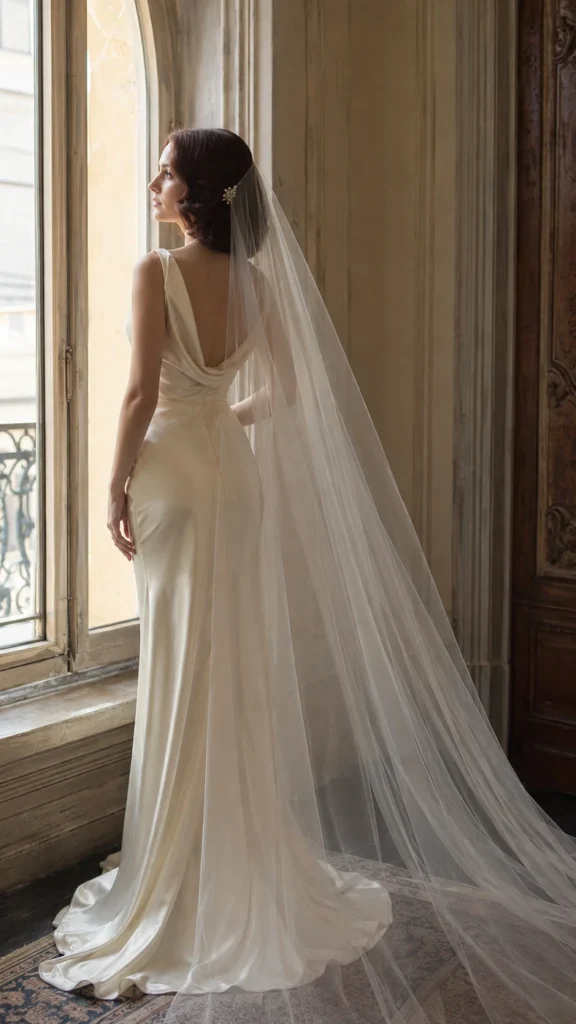
You do not have to avoid long veils completely. A chapel-length veil can create beautiful movement in photographs while remaining more manageable than an extra-long cathedral veil.
This works best when the ceremony area has a firm aisle, wooden platform or relatively smooth sand.
If you want a longer veil, keep the fabric light and avoid excessive gathering around the comb.
4. Be careful with very long cathedral veils
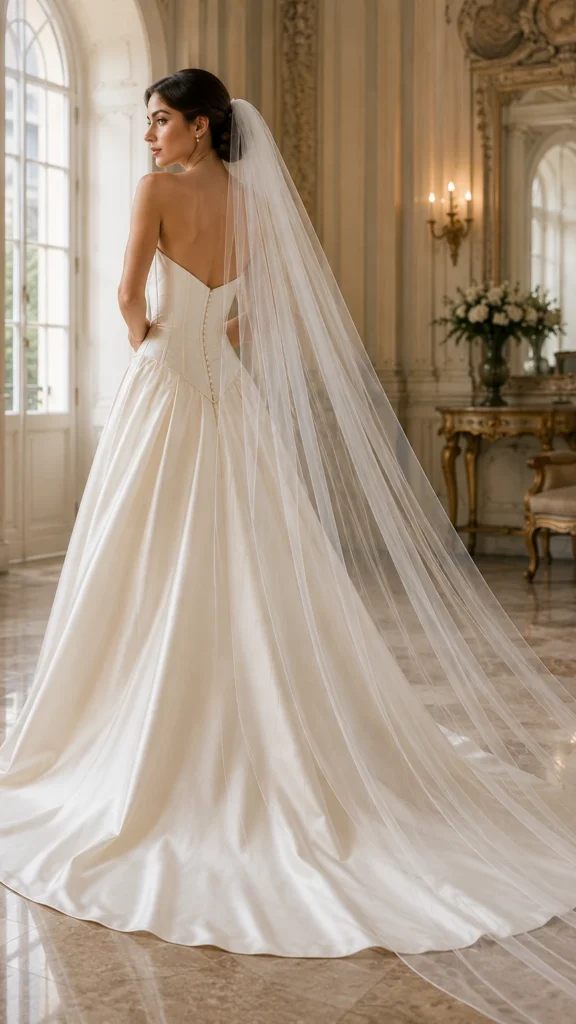
A cathedral veil can look spectacular beside the sea, but it requires more planning. Long trains collect sand more easily and can become difficult to control in strong coastal wind.
For a calm private beach or a styled portrait session, cathedral length can still be an excellent option. For a windy ceremony directly beside the water, a shorter veil is usually easier to manage.

5. Keep the comb secure
Veil attachment matters more outdoors than it does inside a venue. The comb should sit firmly within the hairstyle rather than resting loosely on the surface of the hair.
Low buns, textured updos and half-up hairstyles can all provide good support. Hairpins can also be placed around the comb for additional stability.
If you are planning loose beach waves, discuss the veil placement with your hairstylist before the wedding day so there is enough structure to support the comb.
6. Choose decoration that will not overpower the dress
Beach wedding dresses are often light, fluid and relatively simple, which gives you freedom to add decoration through the veil.
Small embroidered flowers, scattered pearls or a narrow finished edge can add visual interest without making the veil feel heavy.
For tropical or garden-style coastal weddings, botanical embroidery can work particularly well. For minimalist modern ceremonies, clean raw-edge tulle often looks more sophisticated.
7. Think about wind when choosing veil width
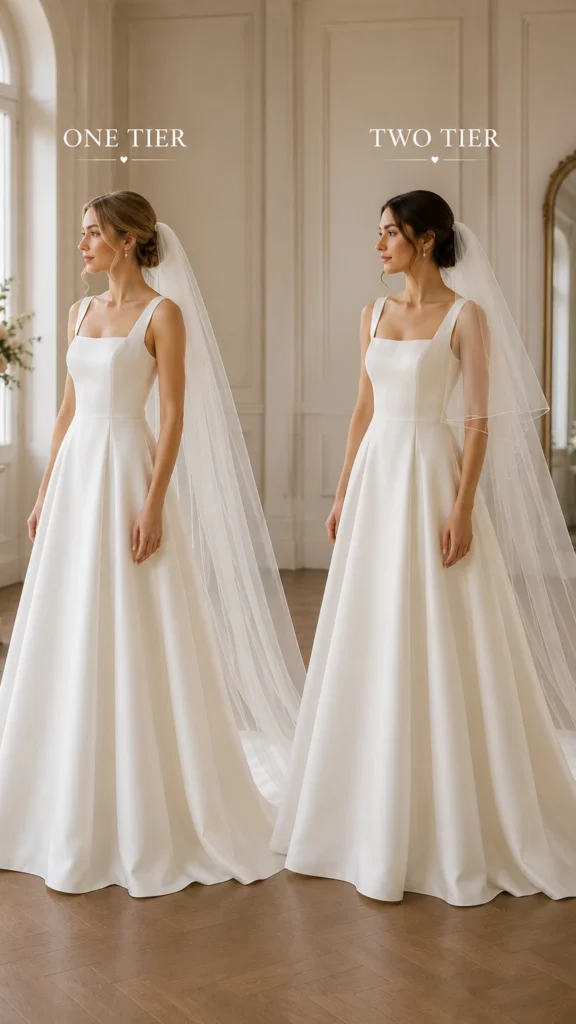
A very wide veil catches more air than a narrow design. If your ceremony location is exposed to strong coastal wind, a narrower or medium-width veil may be easier to control.
You can still create softness around the shoulders without choosing maximum width. Moderate gathering combined with lightweight tulle usually provides enough bridal volume.
What is the best veil length for a beach wedding?
Fingertip length is one of the most practical choices because it provides movement without dragging through sand. Chapel length is a good middle option for brides who want a visible veil train.
Cathedral length is best when dramatic photographs are a priority and the ceremony location allows the veil to be arranged safely.
Should a beach wedding veil have lace or embroidery?
It can. The important factor is weight rather than decoration alone.
Light floral embroidery or a narrow lace edge can work beautifully. Very dense lace covering large sections of the veil can make the fabric heavier and may reduce the airy movement associated with destination bridal styling.
What veil works with a simple beach wedding dress?
A minimalist dress gives you several options. Choose transparent raw-edge tulle for an understated look, floral embroidery for romance or scattered pearls for a subtle shimmer.
If the dress already contains lace, appliqués or statement sleeves, a cleaner veil usually creates better visual balance.
Beach wedding veil checklist
Before ordering, check the veil length, width, fabric softness, gathering, comb attachment, decoration weight and the expected surface at your ceremony location.
Also consider when you plan to remove the veil. Many destination brides wear it for the ceremony and portraits, then remove it before dinner or dancing.
Explore the bridal veil collection at WonderBridalAtelier to compare fingertip, floral, pearl, lace, chapel and cathedral styles.
The best wedding veil for a beach wedding should feel light, secure and comfortable while still giving you the movement and romance you want in photographs. Choosing the right length and width can make a major difference when wind and sand become part of the ceremony.
Visit WonderBridalAtelier on Etsy





Leave a comment