
A hooded wedding veil creates a soft frame around the face before the fabric falls over the shoulders and down the back. It feels more sculptural than a standard veil and can transform a simple dress into a dramatic ceremony look.
The style suits brides who want visible movement without adding a tiara, headband or highly structured hairstyle.

What is a hooded wedding veil?
A hooded wedding veil is shaped so that part of the tulle or lace rests loosely over the head like a soft hood. Unlike a traditional veil attached only at one comb, the fabric frames both sides of the face before flowing behind the bride.
Some designs stay open at the front, while others can be drawn closer around the face. The hood should look airy and elegant, never tight or heavy.
Why brides are choosing hooded veils
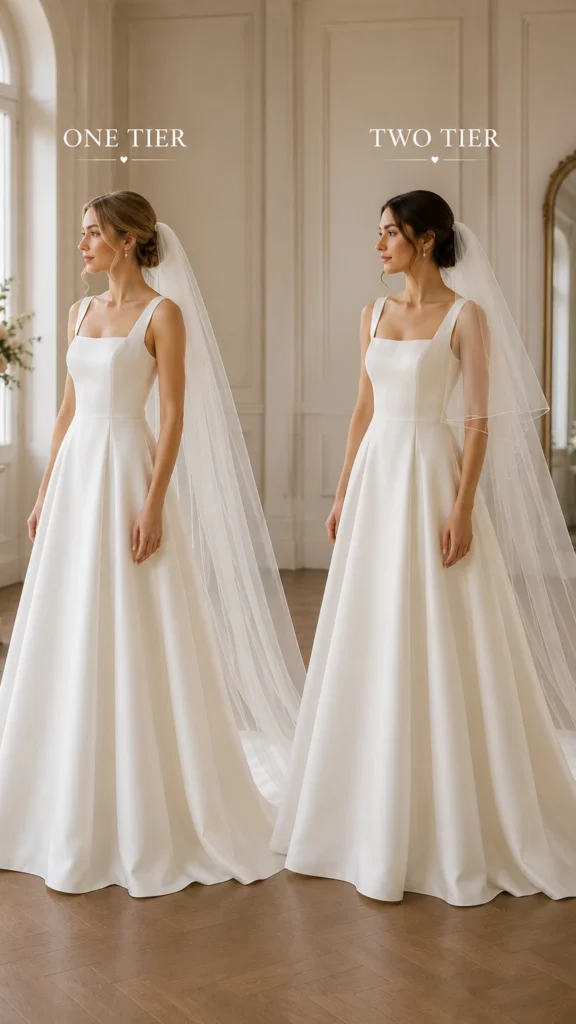
A hooded veil gives the bridal look a strong silhouette from the front, side and back. It can feel ethereal with sheer tulle, romantic with lace or modern beside a clean satin gown.
Because the veil frames the face, the bride may need fewer hair accessories. This works well for minimalist styling and simple hairstyles.
Best dresses for a hooded wedding veil
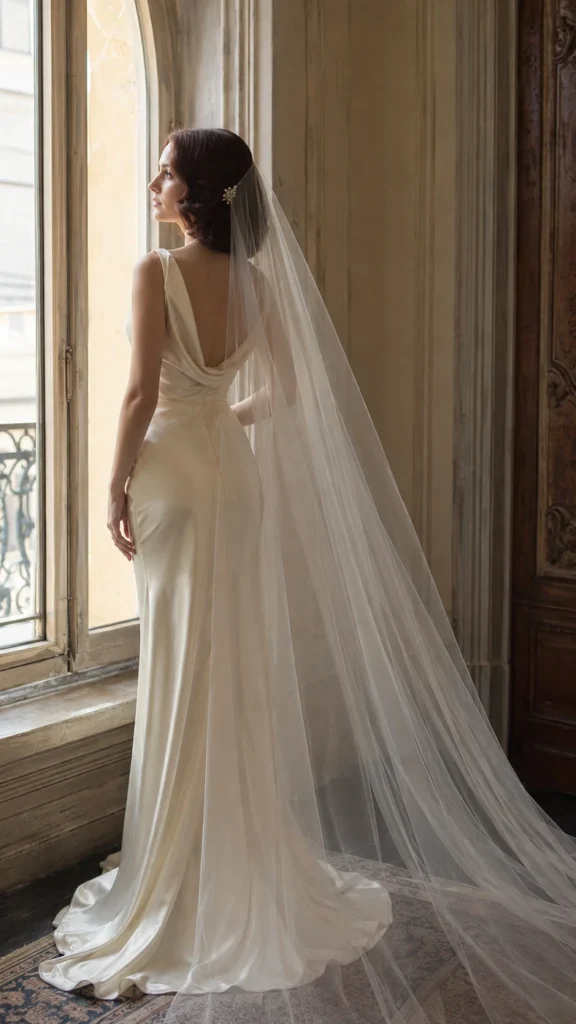
A clean column, slip or structured satin dress gives the hooded veil space to become the main accessory. The contrast between a simple gown and flowing fabric can feel editorial without looking overdecorated.
With a lace dress, choose plain tulle or very delicate lace. Heavy lace around the face combined with a detailed neckline can make the upper part of the look feel crowded.
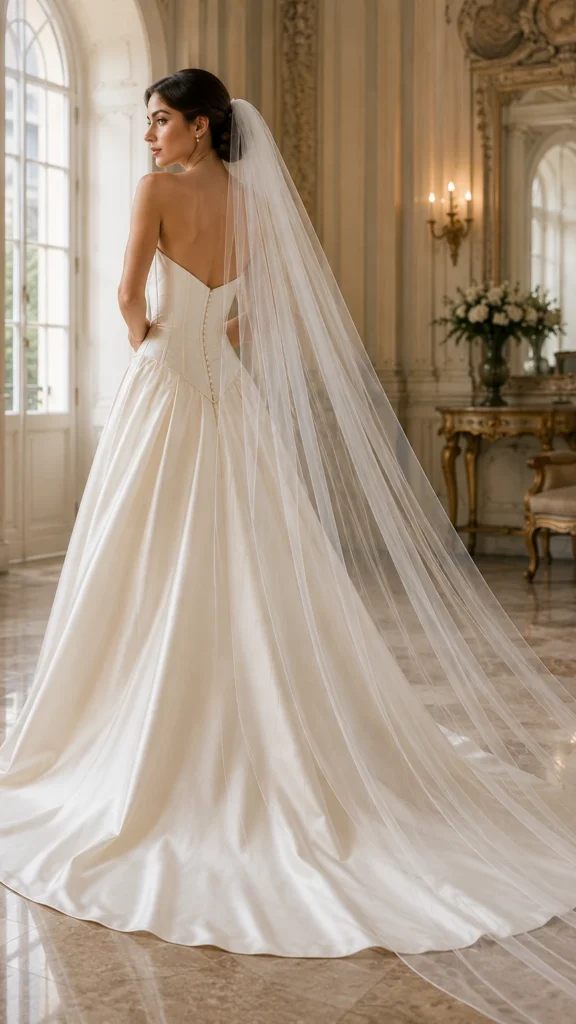
For an open-back dress, use a sheer centre and avoid dense embroidery across the back. A long veil can still create movement while leaving the dress visible.
How to wear a hooded wedding veil with your hairstyle
A low bun gives the veil a stable base and keeps the fabric controlled behind the head. Soft waves create a more relaxed effect, while short hair allows the hood shape to become the main frame.
Test the veil with the exact hairstyle. Too much crown volume can lift the hood away from the head, while very smooth hair may need discreet pins.
Where should the hooded veil be attached?
The attachment may sit at the crown, behind a low bun or near the sides of the head. Small clear combs, hidden pins or loops can keep the fabric balanced.
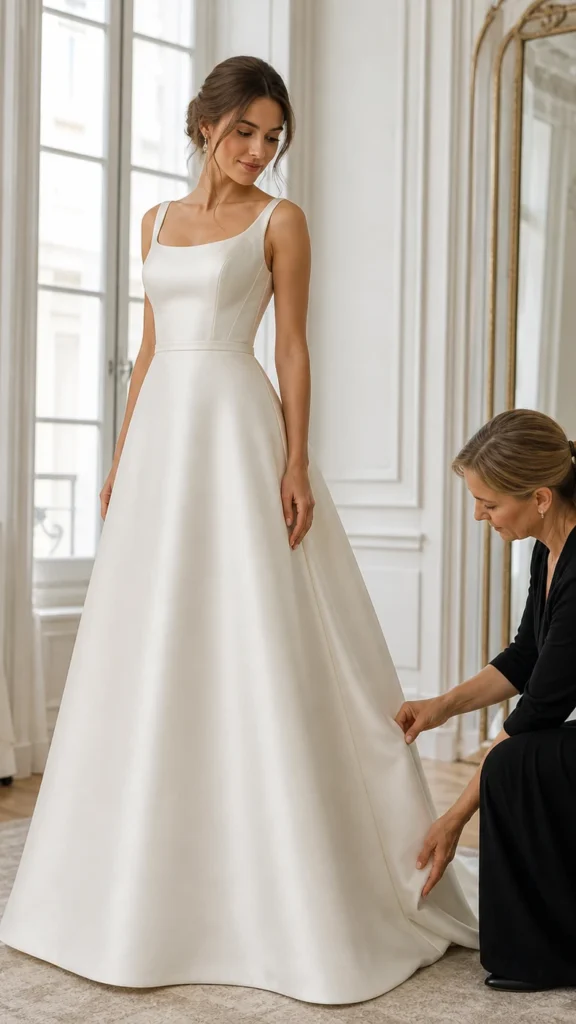
During the fitting, turn your head, bend slightly and walk normally to check whether the hood shifts forward or falls backward.
Choosing the right hooded veil length
A fingertip hooded veil feels lighter and works well for civil ceremonies or shorter dresses. Chapel length adds romantic movement without becoming difficult to manage.
A cathedral-length hooded veil creates the strongest entrance and photography effect. It works best when the hood remains simple and the drama comes mainly from the length.
Can a hooded veil include lace, pearls or embroidery?
Yes, but decoration should follow the dress. Pearls add soft light, lace creates a more historic feeling and scattered embroidery can make the veil more personal.
Keep the face area lighter than the lower section. Dense detail around the eyes, earrings or neckline may look heavy in photographs.

Important fitting and comfort checks
Check the veil indoors and outdoors if possible. Wind can move a hooded veil differently because more fabric rests around the head and shoulders.
Make sure the edge does not rub against the face, catch on earrings or interfere with makeup. Practise lifting the fabric without disturbing the attachment.
Final tip
Choose a hooded wedding veil if you want a bridal accessory with soft drama, movement and a recognisable face-framing shape.
At WonderBridalAtelier, the right veil should feel secure, comfortable and connected to the dress so the bride can move naturally while it remains beautiful from every angle.



Leave a comment