
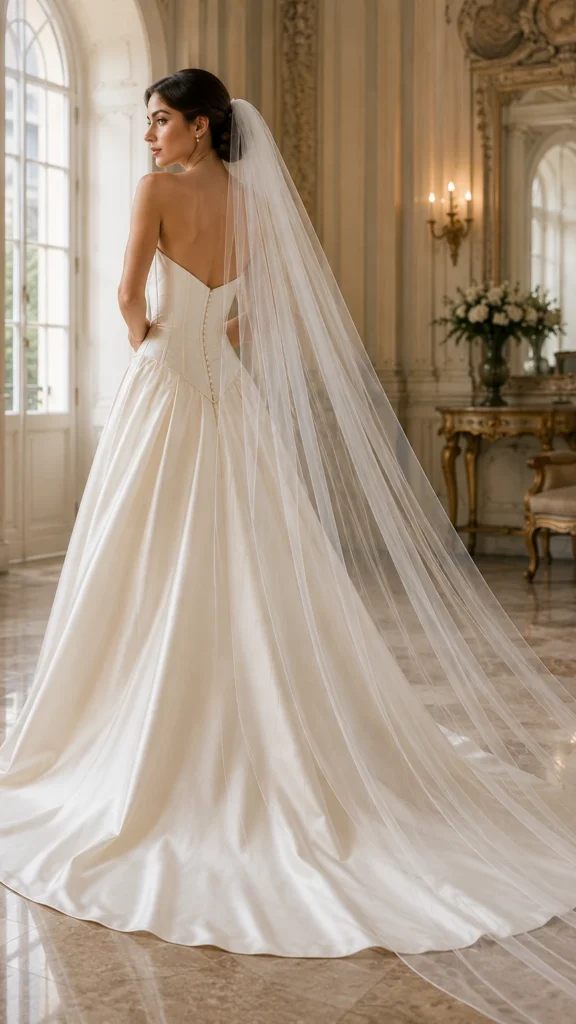
A drop veil creates one of the softest bridal silhouettes. Instead of gathering around a comb, the tulle lies smoothly over the head, falls across the face and continues down the back in one uninterrupted shape.
This style is especially beautiful for brides who want a blusher moment without extra volume around the crown. It can feel traditional during the ceremony and clean, modern and almost weightless after the front layer is lifted.

What is a drop veil?
A drop veil is usually cut from one circular or oval piece of tulle. It has no gathering, so the fabric rests flat and softly follows the shape of the head and shoulders.
When the front section covers the face, it works as a blusher. After it is lifted, the same fabric creates a gentle two-layer effect behind the bride.
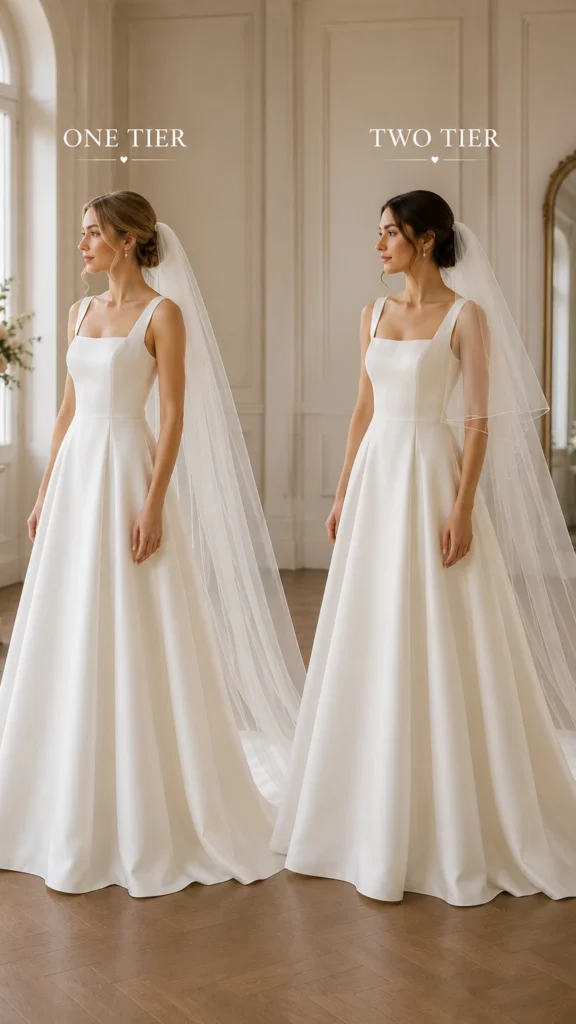
Drop veil vs traditional two-tier veil
A traditional two-tier veil is commonly gathered and attached to a comb, which creates more fullness around the hairstyle. A drop veil has little or no volume at the crown because the tulle is not gathered.
Choose a traditional two-tier veil if you want a fuller silhouette. Choose a drop veil if you prefer a clean face frame, smooth drape and softer movement.
Best dresses for a drop veil
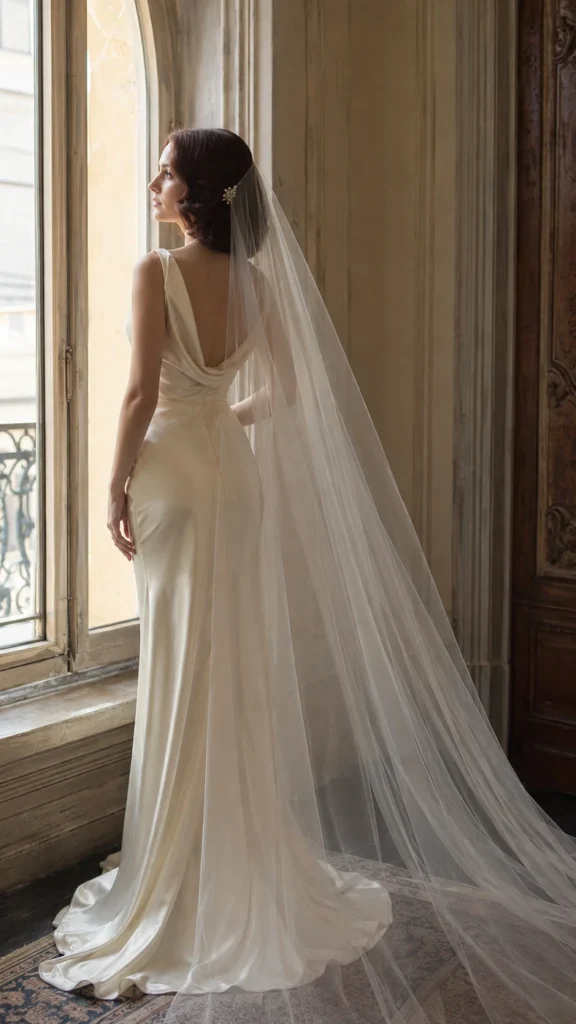
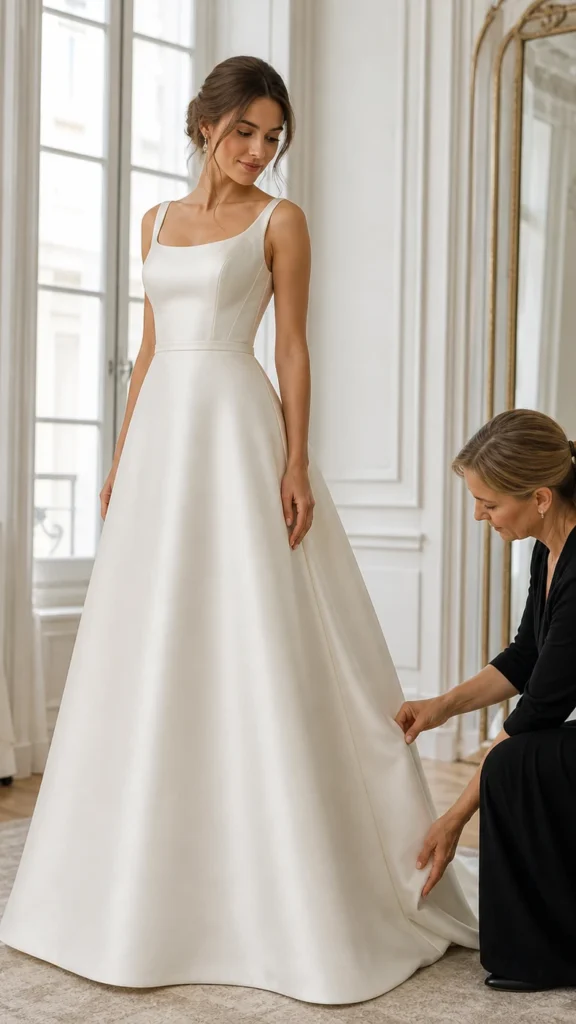
A raw-edge drop veil pairs beautifully with minimalist satin, crepe and mikado dresses. It adds ceremony softness without hiding clean seams or a sculpted bodice.
With a lace dress, choose plain tulle or a narrow lace border so the patterns do not compete. For an open-back gown, a sheer centre allows the back to remain visible.
A fitted column dress can carry a fingertip or chapel drop veil, while a structured A-line or ball gown can support a longer cathedral length.
How to place a drop veil
Placement changes the balance of the veil. Positioned closer to the hairline, the blusher creates a stronger traditional frame. Placed farther back, more of the hairstyle and face remain visible.
Check the position before the ceremony begins. The front layer should fall evenly, clear the bouquet and lift without pulling the back section forward.
How to secure a drop veil
Because there is no gathered comb creating a fixed base, the veil must be secured thoughtfully. Discreet hairpins can work with a bun or textured updo. A small sewn-in comb provides extra stability, while a headband, tiara or hair vine can hold the fabric as part of the design.
Bring the actual veil to the hair trial. Walk, sit, turn your head and test outdoor movement if the ceremony will be windy.
Choosing a drop veil with a blusher
The blusher should be long enough to clear the bouquet and fall naturally over the face, but not so long that it becomes difficult to lift.
Practise who will lift it and when. The front layer should move over the hairstyle, earrings and makeup without catching.
If you do not want your face covered, the veil can be placed farther back and worn without a blusher effect.
Choosing the right drop veil length
A fingertip drop veil feels light and practical. Chapel length adds romantic movement while remaining manageable. Cathedral length creates the strongest aisle and photography effect.
Compare the length with the dress train. A long veil should extend beyond the train or finish at a clearly intentional point.

Edges and embellishments
A raw-cut edge gives the most minimal, barely-there result. A narrow silk edge adds definition, while pearls, crystals or lace create a stronger statement.
Keep the balance simple. If the dress is highly detailed, choose a cleaner veil. If the gown is minimal, the drop veil can carry more decoration.
Final tip
Choose a drop veil if you want a smooth, ungathered veil with a soft blusher and elegant movement.
At WonderBridalAtelier, the right veil should feel secure, photograph beautifully and support the dress without hiding the details that made you choose it.



Leave a comment