
A mantilla wedding veil creates one of the most recognisable bridal silhouettes: smooth tulle draped over the head, a lace edge framing the face and a soft fall over the shoulders.
It can feel traditional, romantic or modern depending on the lace, length and placement. The key is choosing a veil that supports the dress rather than covering its most beautiful details.

What is a mantilla wedding veil?
A mantilla veil is usually made from soft tulle with a decorative lace border. Unlike a heavily gathered veil, it often lies more smoothly around the head and shoulders, allowing the lace to form a clear frame around the bride.
The veil may be secured with discreet pins or a comb near the crown. Some brides wear it closer to the hairline for a stronger face-framing effect, while others position it slightly farther back for a lighter modern look.
Why the mantilla veil is returning
Brides are looking for veils that feel like a complete design rather than a simple layer of tulle. A mantilla adds visible lace and a strong presence in ceremony photographs.
Best dresses for a mantilla wedding veil
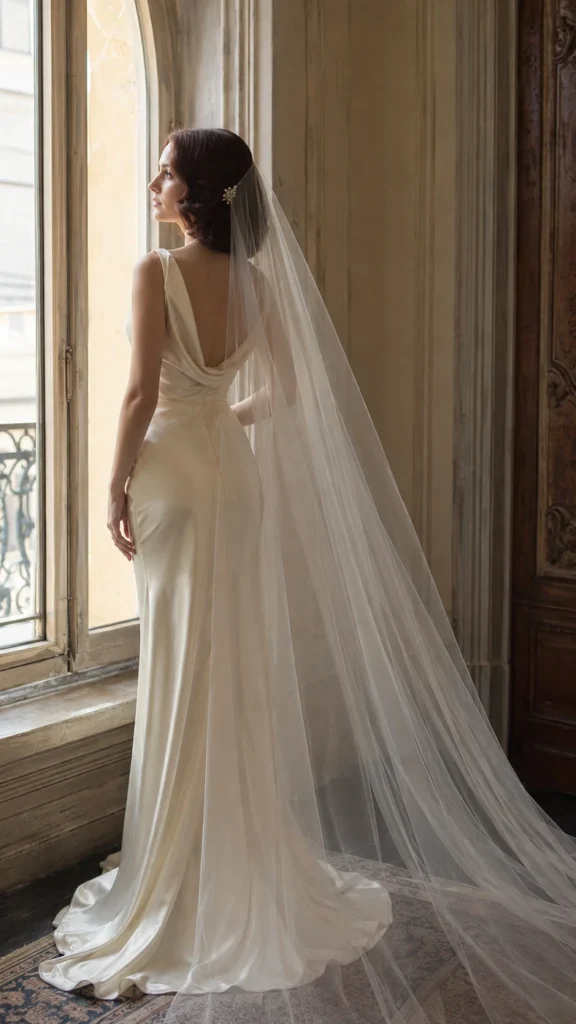
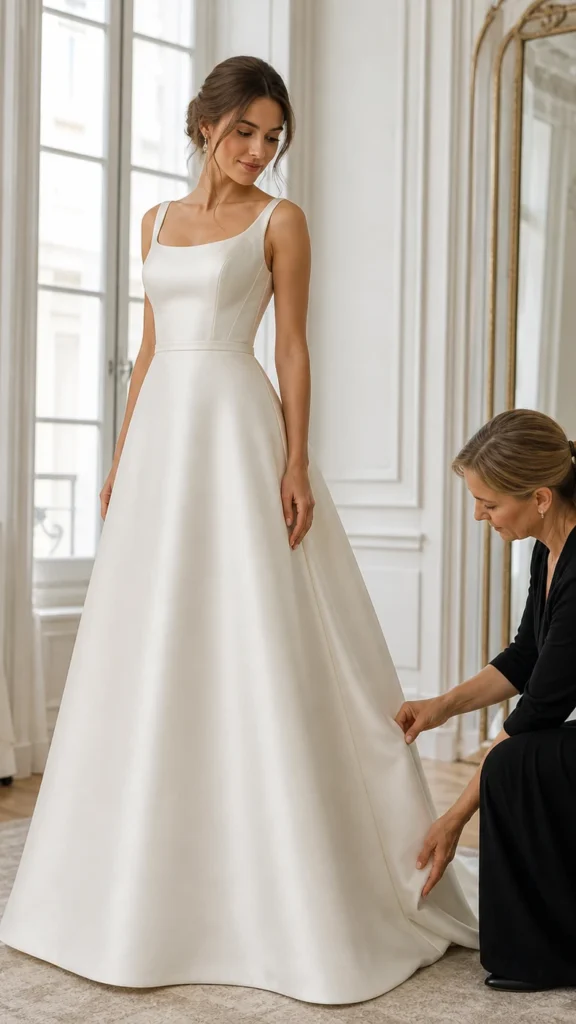
A simple satin, crepe or mikado dress gives the lace border space to become the main decorative detail.
With a lace dress, compare the patterns carefully. The veil lace does not need to be identical, but the scale, shape and density should feel connected. Two large competing lace patterns can make the upper part of the look feel crowded.
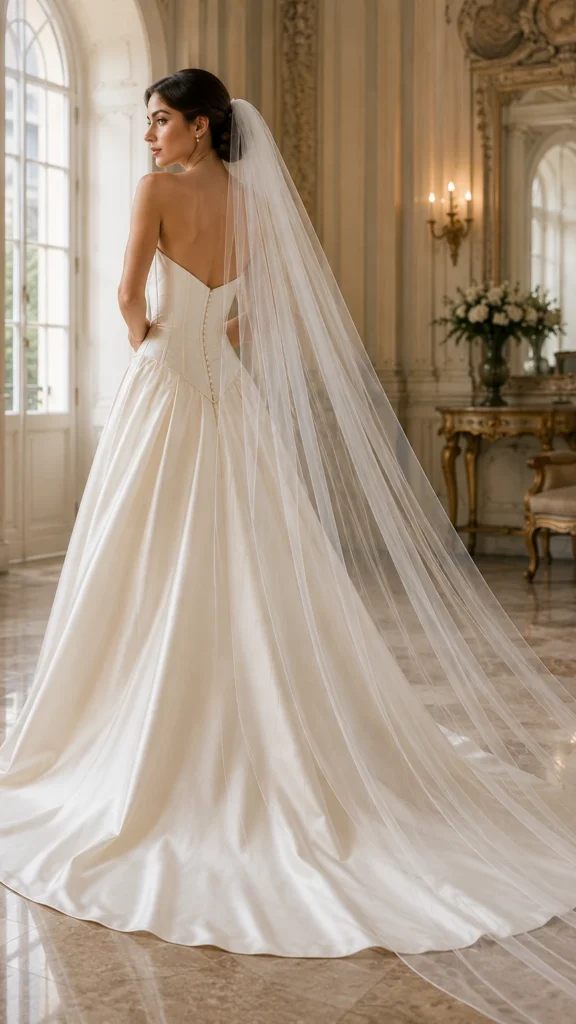
For an open-back dress, choose a lighter lace edge and sheer centre so the back remains visible. If the gown has a detailed train, the veil should complement it instead of covering the embroidery completely.
How to place a mantilla veil
Placement changes the whole effect. Closer to the hairline, the lace frames the face more strongly and creates a traditional silhouette. Placed farther back, the veil feels softer and leaves more of the hairstyle visible.
Test the veil from the front, side and back. The lace should fall evenly and should not fold inward around the cheeks or pull unevenly over the shoulders.
Best hairstyles for a mantilla veil
A low bun or chignon creates a stable base and keeps the veil shape controlled. Soft waves worn down create a more relaxed romantic effect, while short hair allows the lace frame to become the main feature.
Bring the veil to the hair trial. The stylist should test the comb or pins while you walk, sit and turn your head.
Choosing the right mantilla veil length
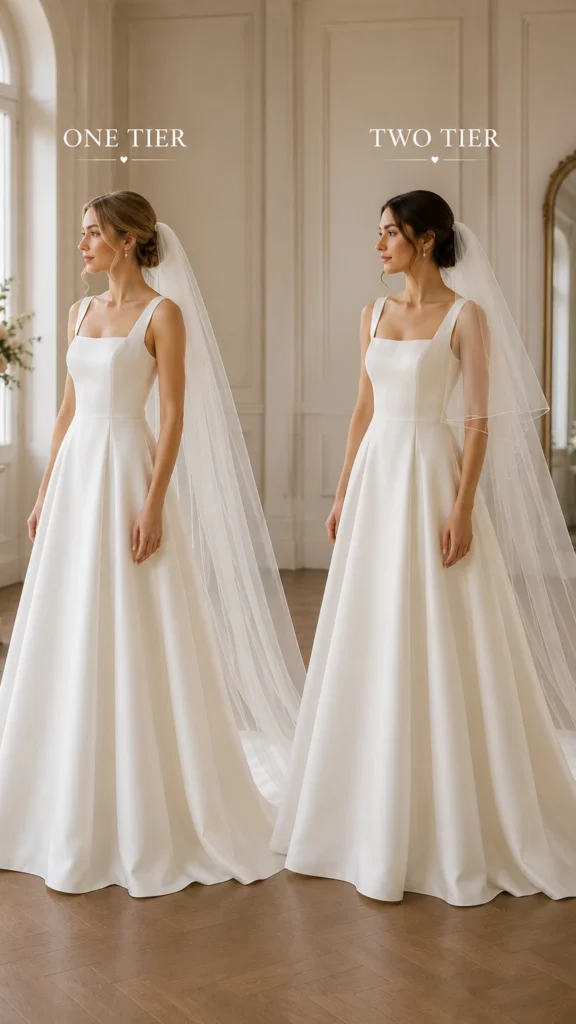
Fingertip length feels lighter and easier to manage. Chapel length adds movement. Cathedral length creates the strongest ceremony effect and suits formal venues.
Match the veil length to the dress train. A very long veil should extend beyond the train or finish at a clearly intentional point rather than ending awkwardly in the middle.
Can a mantilla veil include a blusher?
Yes, but the front layer must lift smoothly without disturbing the lace placement. Test the blusher with earrings, makeup and hairstyle before the wedding day.
If the lace around the face is already strong, a plain sheer blusher may keep the look more balanced.

What to avoid
Avoid choosing the veil only from close-up photographs. View it with the actual dress and check the lace in daylight.
Also avoid too many statement details together. A heavily beaded gown, large tiara, ornate earrings and wide lace veil can compete for attention.
Final tip
Choose a mantilla wedding veil if you want the veil to frame the face, add visible lace and create a romantic entrance without relying on excessive volume.
At WonderBridalAtelier, the best veil should feel connected to the dress, secure in the hairstyle and beautiful from every angle throughout the ceremony.



Leave a comment