
Choosing the right veil is not only about length. Wedding veil width changes how much tulle frames your shoulders, how visible your dress remains, how full the veil looks at the comb and how dramatically it spreads in photographs.
Two veils with the same length can create completely different silhouettes simply because one is narrow and the other is wide. Before ordering, think about your gown shape, neckline, train and how much volume you want around your upper body.

What Does Wedding Veil Width Change?
Width controls the amount of fabric moving across the back and around the shoulders. A narrow veil usually falls in a clean line behind the body. A medium-width veil creates more framing without becoming overly full. A wide veil can spread beyond the shoulders and create a softer, more dramatic bridal silhouette.
Width should not be confused with gathering. A wide piece of tulle can still look airy when lightly gathered, while a narrower veil can appear fuller near the comb when strongly gathered.
1. Choose a Narrow Veil When the Dress Should Stay Visible
A narrow veil is ideal for brides who want a light, modern effect. It works especially well with sheath, column and mermaid dresses because it follows the vertical line of the gown instead of adding extra width.
It can also be a smart choice for dresses with detailed sleeves, an ornate back or statement lace that you do not want to hide.
2. Choose Medium Width for the Most Versatile Balance
Medium width is a practical starting point for many bridal looks. It gives enough fabric to softly frame the shoulders while keeping the dress easy to see.
This proportion works beautifully with many A-line gowns, fit-and-flare silhouettes and dresses with moderate trains. It is also useful when you want a romantic effect without the stronger volume of a very wide veil.
3. Choose a Wide Veil for Dramatic Photographs
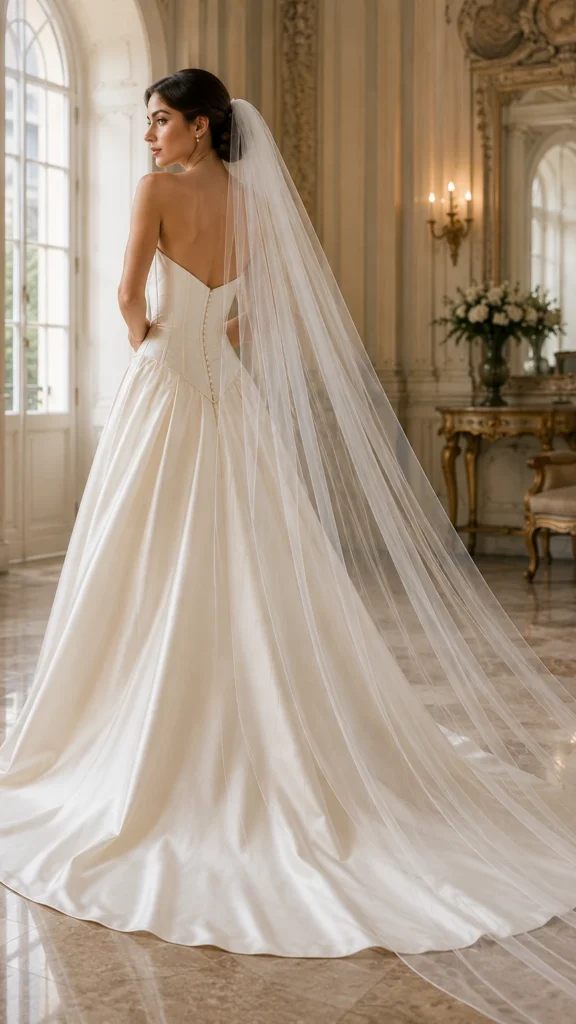
A wide veil creates more visual spread behind the bride and can make cathedral-length designs feel especially luxurious. It can balance the scale of a ball gown, a full A-line skirt or a dress with a broad train.
Wide veils also give photographers more fabric to arrange for sweeping train images. However, more width can mean more fabric around the shoulders, so check how much coverage you actually want from the front.
4. Match Veil Width to the Neckline and Sleeves
Your neckline can help determine how much veil fabric looks balanced around the upper body. Strapless and simple sleeveless gowns can usually support more width because there are fewer details to compete with.
For off-shoulder dresses, illusion sleeves, detailed lace sleeves or elaborate backs, a narrower or lightly gathered veil can preserve the design of the gown.
If the dress is minimalist, extra width can become part of the statement instead of competing with it.
5. Consider the Dress Train, Not Only the Bodice
For chapel and cathedral veils, compare the veil width with the width of the dress train. A very narrow veil over a large ball-gown train may look visually undersized, while a very wide veil over a slim sheath dress may feel more dramatic than intended.
The goal is not to match the train exactly. The veil should create a deliberate proportion around it.

Wedding Veil Width Buying Checklist
Before ordering, check:
- the exact veil length and width;
- how strongly the tulle is gathered at the comb;
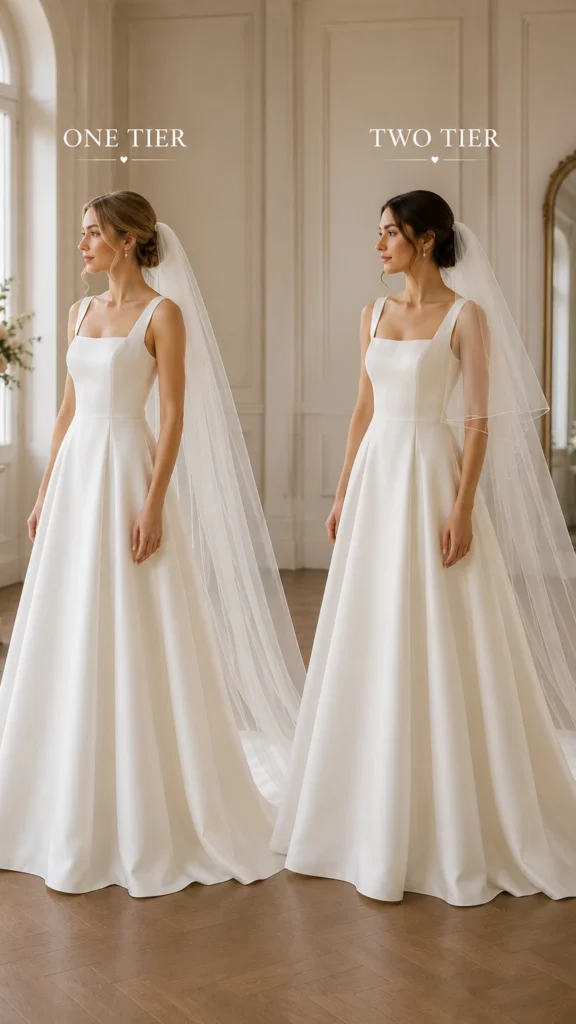
- whether the veil is one or two layers;
- how much shoulder coverage you want;
- the width of your dress skirt and train;
- whether lace, flowers or pearls add visual weight;
- where the comb will sit in your hairstyle.
Explore the bridal veil collection at WonderBridalAtelier to compare different silhouettes, lengths and decorative finishes. If you are still deciding between two options, use the Size & Colour Guide and compare the veil with a clear photograph of your dress.
The best wedding veil width is the one that makes your gown look more complete. Choose narrow for clean simplicity, medium for balanced versatility or wide for a fuller, more romantic statement.




Leave a comment