
You do not necessarily need to match the lace exactly. In many cases, a clean sheer veil creates a more elegant result because it allows the dress pattern to remain clearly visible.

1. Let the wedding dress decide how detailed the veil should be
Start by looking at the complete gown rather than the veil alone. If the dress has dense lace from the neckline to the train, a simple transparent veil can provide contrast and breathing space.
If the lace appears only around the bodice, sleeves or back, you have more freedom to add subtle embroidery, pearls or a decorative edge to the veil.
The goal is not to make every bridal element equally detailed. Decide whether the dress or veil should be the stronger visual feature.
2. A simple sheer veil is often the safest choice
Fine transparent tulle works beautifully over intricate lace because it adds softness and movement without introducing another competing pattern.
A raw edge almost disappears against the dress. A narrow satin edge creates a little more definition while still keeping the center clean.
For brides who want a traditional ceremony moment, the Cathedral Wedding Veil with Blusher combines transparent tulle with a defined satin ribbon edge and a separate face-covering front layer.
3. Do not try to copy the dress lace exactly
Two different lace patterns can still work together when they share a similar scale and style. Small botanical lace on a dress can pair with a delicate floral border, while larger motifs usually need more visual space.
Problems appear when two strong patterns overlap in exactly the same area. Dense lace on both the dress back and veil can merge visually and make the individual details difficult to see.
4. Keep an open back visible
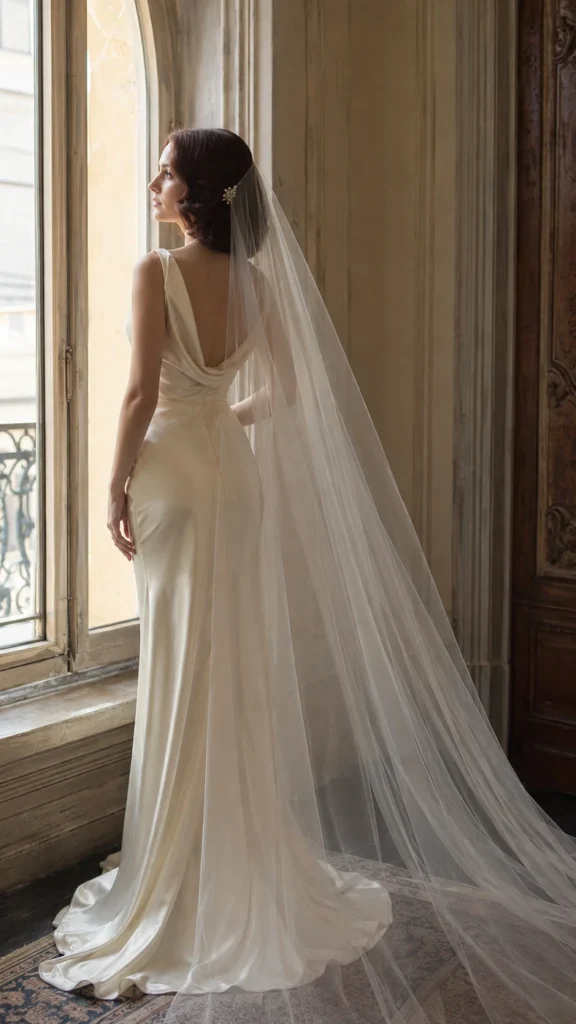
If your lace wedding dress has an open back, buttons or an illusion panel, choose a veil with a transparent center.
Decoration can be moved toward the sides, edge or lower train. This creates a frame around the dress instead of placing another dense layer directly over its most important feature.
5. Match the veil length to the dress train
Fingertip length keeps the veil away from the dress train and works well when the lower section of the gown has important lace detail.
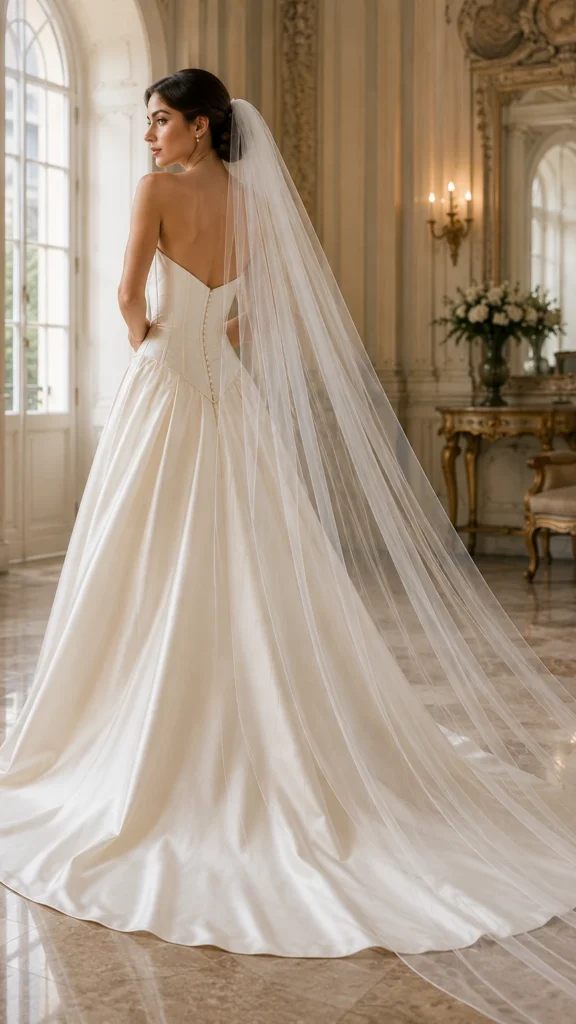
Chapel length creates soft floor movement without becoming extremely dramatic. Cathedral length can beautifully frame a long lace train, but the proportions should feel intentional.
When the gown already has a train, a long veil usually looks more balanced when it clearly extends beyond it rather than stopping only slightly after the dress.
6. Match ivory shades in natural light
Lace is usually more opaque than transparent tulle, which makes color differences easier to notice.
Compare bright white, natural white and light ivory near a window. A very transparent ivory veil may appear almost colorless in one layer but warmer where the tulle gathers around the comb.
Pay particular attention to the lace embroidery or appliqués. These details can show a stronger ivory or white undertone than the sheer tulle itself.
7. Decide whether you want contrast or continuity
There are two successful approaches.
For continuity, choose a veil with delicate lace or embroidery that echoes the romantic character of the gown. For contrast, use completely sheer tulle to place all attention on the lace dress.
A minimalist veil often makes an ornate dress look more refined, while a lightly decorated veil can add personality to a gown with restrained lace.
Can you wear a floral veil with a lace wedding dress?
Yes, but flower placement becomes important. Choose small embroidery, restrained appliqués or floral detail concentrated around the lower portion of the veil.
Avoid placing large dimensional flowers directly over equally large dress motifs. Leaving transparent areas between the designs helps both details remain visible.
What about a mantilla veil?
A mantilla can work beautifully with a lace gown when the two patterns are carefully balanced. Because its lace frames the face and perimeter, the center can remain transparent over the dress.
With a heavily embroidered gown, choose a narrower mantilla border. With a simpler lace dress, a wider scalloped edge can create a stronger traditional statement.
Wedding veil for lace dress buying checklist
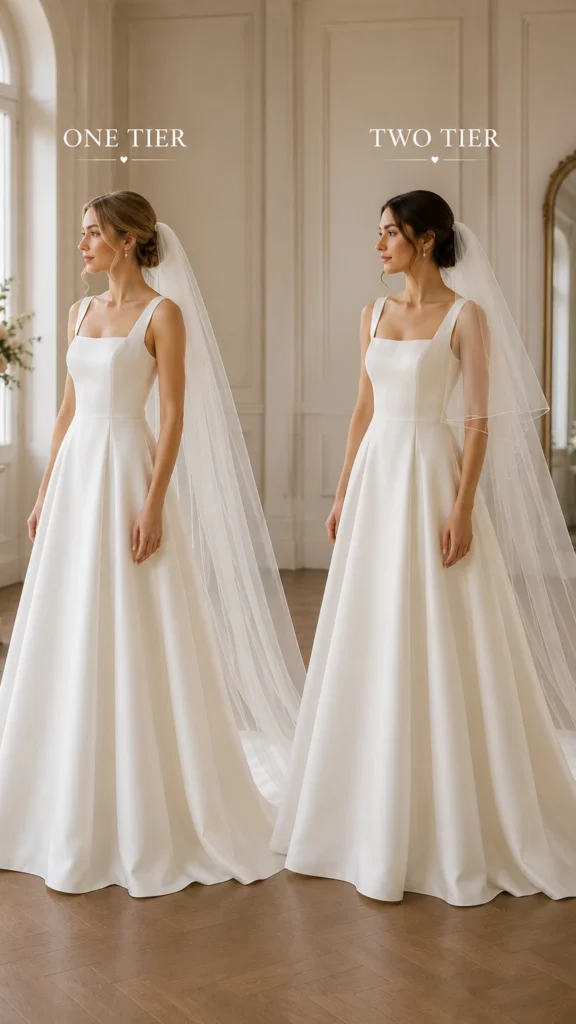
Before ordering, check the veil length, width, tulle color, decoration density, lace or embroidery shade, number of layers, edge, gathering and comb attachment.
If possible, photograph your dress in natural daylight and compare the complete bridal look from the front, side and back. The veil should complement the lace rather than cover the details you paid for and loved.
Find the right veil for your lace wedding dress
Choose sheer tulle for maximum dress visibility, a delicate edge for subtle definition, a mantilla for face-framing romance or a cathedral veil when you want to extend the drama of the dress train.
Explore the bridal veil collection at WonderBridalAtelier to compare simple, floral, lace, mantilla, blusher and cathedral styles.
The best wedding veil for a lace dress should make the gown look more complete while allowing its texture, silhouette and craftsmanship to remain the center of attention.
Visit WonderBridalAtelier on Etsy
Choosing a wedding veil for a lace dress is all about balance. Lace already creates pattern, texture and visual detail, so the veil should enhance the gown without making the complete bridal look feel crowded.
You do not necessarily need to match the lace exactly. In many cases, a clean sheer veil creates a more elegant result because it allows the dress pattern to remain clearly visible.
1. Let the wedding dress decide how detailed the veil should be
Start by looking at the complete gown rather than the veil alone. If the dress has dense lace from the neckline to the train, a simple transparent veil can provide contrast and breathing space.
If the lace appears only around the bodice, sleeves or back, you have more freedom to add subtle embroidery, pearls or a decorative edge to the veil.
The goal is not to make every bridal element equally detailed. Decide whether the dress or veil should be the stronger visual feature.
2. A simple sheer veil is often the safest choice
Fine transparent tulle works beautifully over intricate lace because it adds softness and movement without introducing another competing pattern.
A raw edge almost disappears against the dress. A narrow satin edge creates a little more definition while still keeping the center clean.
For brides who want a traditional ceremony moment, the Cathedral Wedding Veil with Blusher combines transparent tulle with a defined satin ribbon edge and a separate face-covering front layer.
3. Do not try to copy the dress lace exactly
Two different lace patterns can still work together when they share a similar scale and style. Small botanical lace on a dress can pair with a delicate floral border, while larger motifs usually need more visual space.
Problems appear when two strong patterns overlap in exactly the same area. Dense lace on both the dress back and veil can merge visually and make the individual details difficult to see.
4. Keep an open back visible
If your lace wedding dress has an open back, buttons or an illusion panel, choose a veil with a transparent center.
Decoration can be moved toward the sides, edge or lower train. This creates a frame around the dress instead of placing another dense layer directly over its most important feature.
5. Match the veil length to the dress train
Fingertip length keeps the veil away from the dress train and works well when the lower section of the gown has important lace detail.
Chapel length creates soft floor movement without becoming extremely dramatic. Cathedral length can beautifully frame a long lace train, but the proportions should feel intentional.
When the gown already has a train, a long veil usually looks more balanced when it clearly extends beyond it rather than stopping only slightly after the dress.
6. Match ivory shades in natural light
Lace is usually more opaque than transparent tulle, which makes color differences easier to notice.
Compare bright white, natural white and light ivory near a window. A very transparent ivory veil may appear almost colorless in one layer but warmer where the tulle gathers around the comb.
Pay particular attention to the lace embroidery or appliqués. These details can show a stronger ivory or white undertone than the sheer tulle itself.
7. Decide whether you want contrast or continuity
There are two successful approaches.
For continuity, choose a veil with delicate lace or embroidery that echoes the romantic character of the gown. For contrast, use completely sheer tulle to place all attention on the lace dress.
A minimalist veil often makes an ornate dress look more refined, while a lightly decorated veil can add personality to a gown with restrained lace.
Can you wear a floral veil with a lace wedding dress?
Yes, but flower placement becomes important. Choose small embroidery, restrained appliqués or floral detail concentrated around the lower portion of the veil.
Avoid placing large dimensional flowers directly over equally large dress motifs. Leaving transparent areas between the designs helps both details remain visible.
What about a mantilla veil?
A mantilla can work beautifully with a lace gown when the two patterns are carefully balanced. Because its lace frames the face and perimeter, the center can remain transparent over the dress.
With a heavily embroidered gown, choose a narrower mantilla border. With a simpler lace dress, a wider scalloped edge can create a stronger traditional statement.
Wedding veil for lace dress buying checklist
Before ordering, check the veil length, width, tulle color, decoration density, lace or embroidery shade, number of layers, edge, gathering and comb attachment.
If possible, photograph your dress in natural daylight and compare the complete bridal look from the front, side and back. The veil should complement the lace rather than cover the details you paid for and loved.

Find the right veil for your lace wedding dress
Choose sheer tulle for maximum dress visibility, a delicate edge for subtle definition, a mantilla for face-framing romance or a cathedral veil when you want to extend the drama of the dress train.
Explore the bridal veil collection at WonderBridalAtelier to compare simple, floral, lace, mantilla, blusher and cathedral styles.
The best wedding veil for a lace dress should make the gown look more complete while allowing its texture, silhouette and craftsmanship to remain the center of attention.
Visit WonderBridalAtelier on Etsy



Leave a comment