
A lace wedding veil can add romance, texture and a defined frame to the bridal silhouette. Depending on the lace placement, it may softly outline the veil or become the main decorative feature of the complete wedding look.
The most important decision is not simply whether you like lace. The pattern, scale, color and placement should work with the wedding dress rather than compete with its neckline, sleeves or train.

What is a lace wedding veil?
A lace wedding veil is made from sheer bridal tulle decorated with lace edging, embroidered motifs or larger lace appliqués.
Some veils have a narrow border that creates a delicate outline. Others use wide scalloped lace around the complete edge, while mantilla-style veils place the lace close to the face and allow it to flow over the shoulders.
Choose between a lace edge and lace appliqués
A lace-edge veil creates a continuous frame around the tulle. It is especially visible around a chapel or cathedral-length train and gives the veil a traditional, finished appearance.
Lace appliqués are individual motifs placed across selected areas of the veil. They may be scattered lightly, concentrated near the lower train or arranged around the edge.
Choose a lace border when you want a clearly defined shape. Choose appliqués when you prefer a softer pattern with more transparent space between the details.
How to match a lace wedding veil to a lace dress
The veil lace does not need to be an exact copy of the dress lace. However, the patterns should share a similar mood, scale or level of detail.
A gown with small delicate floral lace usually works best with fine lace or restrained embroidery. A dress with large botanical motifs can support a wider border, provided the patterns do not overlap heavily in the same area.
Compare the veil over the actual dress back. If both layers contain dense lace, the details may visually merge and become difficult to distinguish in photographs.
Best lace veil for a simple wedding dress
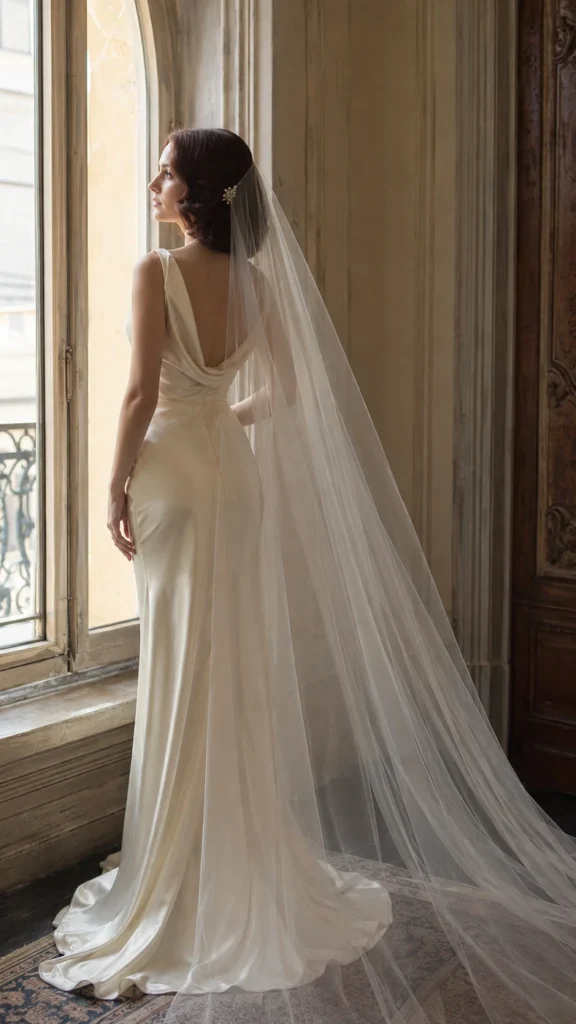
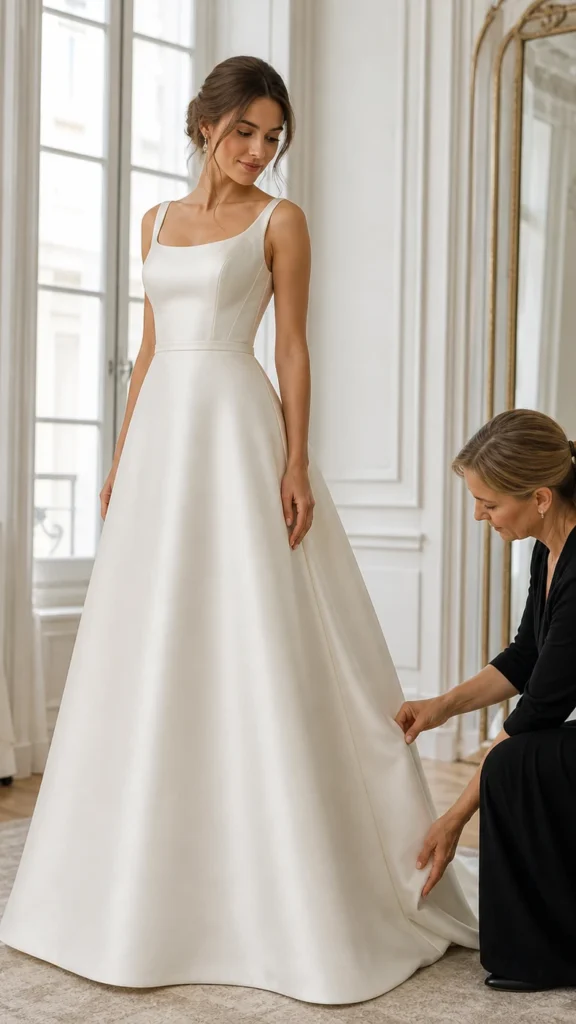
A clean satin, mikado or crepe dress gives a lace veil room to become the main accessory. A wide scalloped edge can add traditional romance, while floral appliqués can create a softer garden-inspired look.
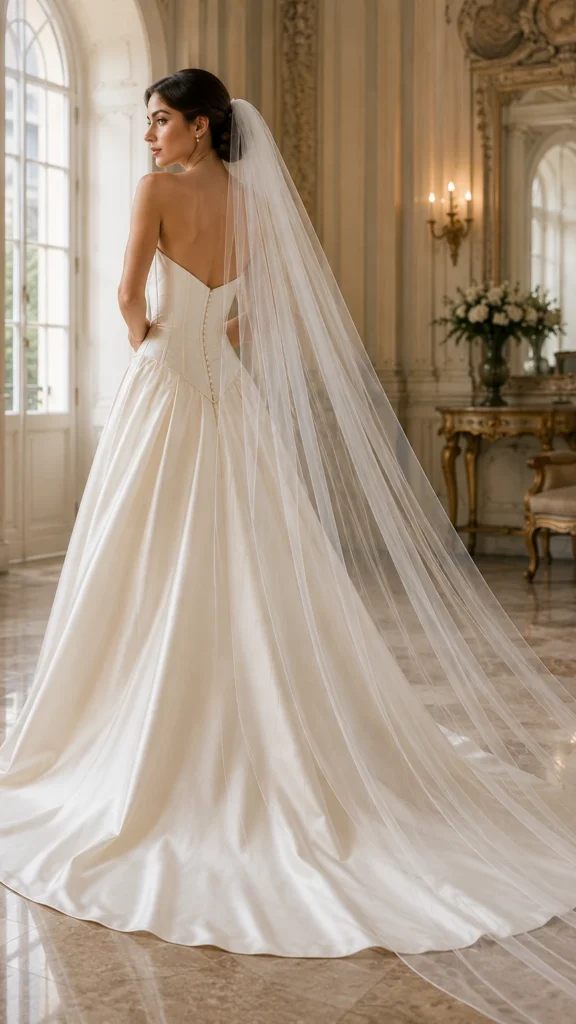
Keep the centre of the veil transparent when the gown has an open back, decorative buttons or a sculpted bodice that should remain visible.
Choose the right lace placement
Lace placed around the entire edge creates a strong frame from the hairstyle to the train. This placement works beautifully for mantilla and formal cathedral veils.
Lace concentrated near the lower half keeps the veil light around the head and shoulders while creating more detail in aisle photographs.
A sheer centre with lace around the sides is a practical option for an open-back dress because it adds decoration without covering the gown.
Cathedral, chapel or fingertip lace veil?
A fingertip lace veil feels lighter and keeps the detail close to the bodice and waist. It is suitable for smaller ceremonies, fitted dresses and brides who want easier movement.
Chapel length creates a soft floor-length effect without an extremely long train. A cathedral lace wedding veil creates the strongest ceremony entrance and allows the lace border to form a wide frame behind the dress.
Measure from the planned attachment point in the hairstyle and compare the result with the dress train before ordering.
Match the ivory shade carefully
Lace is more opaque than transparent tulle, so a difference between white and ivory may be more visible around the border or appliqués.
Compare the lace with the dress in natural daylight. A light ivory veil usually works with many modern ivory gowns, while bright white lace is best reserved for a genuinely white dress.
Mantilla veil or gathered lace veil?
A mantilla veil lies more smoothly around the head and allows the lace to frame the face. It creates less crown volume and gives the lace a continuous, elegant fall.
A gathered veil attached to a comb creates more fullness behind the hairstyle. It is a good option for brides who want a traditional silhouette or a separate blusher layer.
Lace wedding veil buying checklist
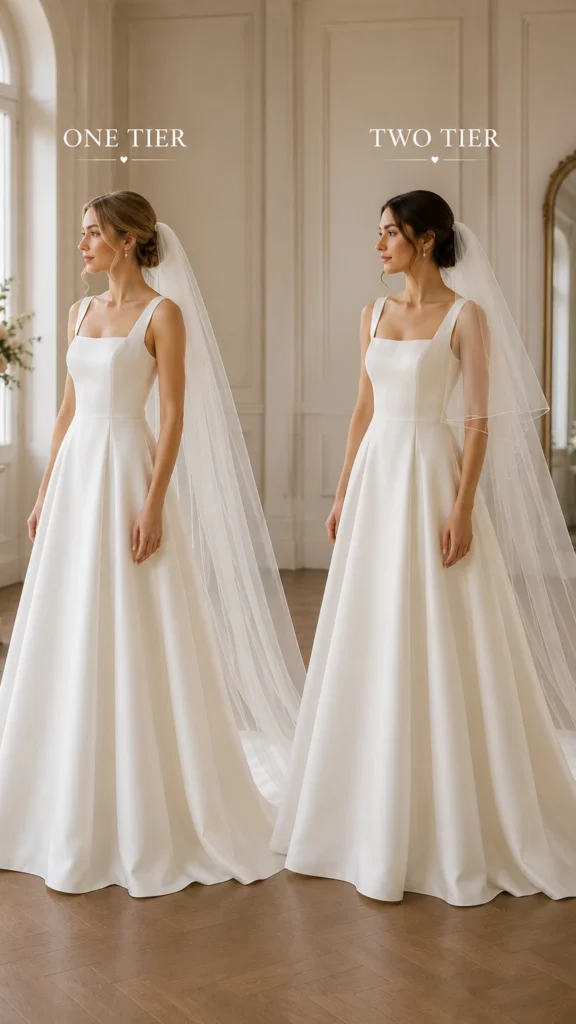
Before ordering, confirm the veil length, width, tulle color, lace color, border width, motif placement, number of layers, gathering and comb attachment.
Check whether the product photographs show the exact lace layout. Handmade placement may vary slightly, so ask for guidance when matching a detailed wedding dress.

Find your lace bridal veil
The best lace veil should make the dress feel more complete without hiding its shape or repeating too many decorative elements.
Explore the bridal veil collection at WonderBridalAtelier to compare lace, mantilla, floral, blusher and cathedral styles.
You can also contact the atelier with a photograph of your dress for help comparing veil length, ivory shade and finishing details before ordering.



Leave a comment