
Wedding veil length determines where the veil finishes, but wedding veil width determines how full, transparent and dramatic it looks around the bride.
Two cathedral veils can have exactly the same length and still create completely different silhouettes. A narrow veil falls in a clean column behind the dress, while a full-width veil surrounds the train with a wider layer of tulle.

What does wedding veil width mean?
Wedding veil width is the measurement of the tulle from one side to the other before it is gathered or attached to the comb. It is separate from the veil length, which is measured from the attachment point to the lower edge.
Width affects three important details: how much volume appears around the hairstyle, how transparent the veil looks over the dress and how widely a long veil spreads across the floor.
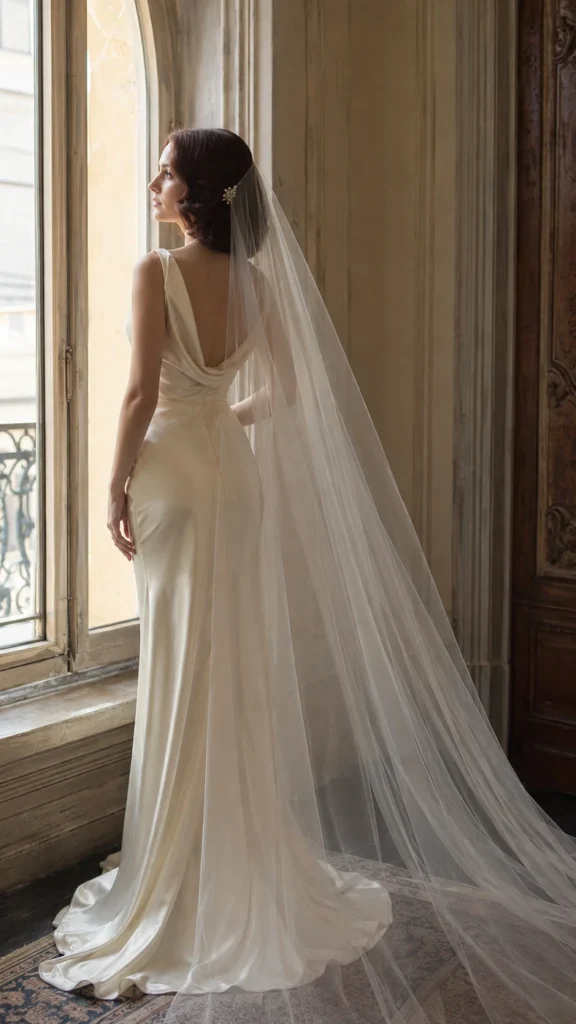
54-inch wedding veil: narrow and minimal
A 54-inch wedding veil creates the slimmest and most transparent silhouette. It usually falls behind the shoulders rather than wrapping widely around them.
This width works beautifully with fitted column, sheath, slip and mermaid wedding dresses. It is also helpful when the gown has detailed sleeves, an open back, buttons or embroidery that should remain clearly visible.
Choose a narrow veil when you want softness and movement without adding noticeable fullness around the crown or dress train.
72-inch wedding veil: balanced and versatile
A 72-inch veil is a medium-width option that provides more coverage than a narrow veil without creating an especially voluminous effect.
It complements many A-line, fitted and softly structured dresses. At fingertip length, it gives the veil a romantic fall around the shoulders. At chapel or cathedral length, it creates a balanced floor spread while keeping the gown visible through the tulle.
Medium width is often the most practical starting point for a bride who wants a traditional veil but is unsure how much fullness will suit her dress.
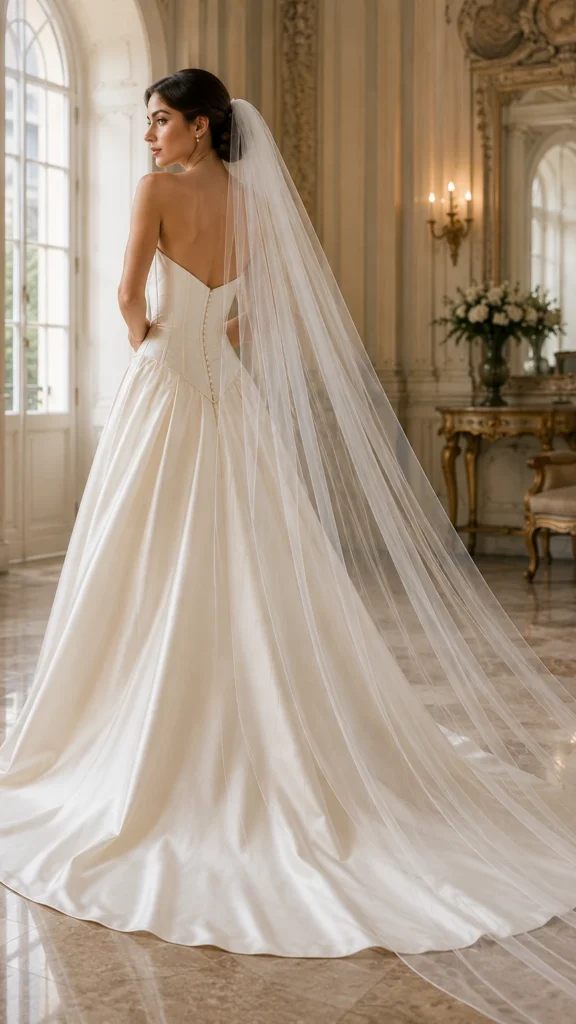
108-inch wedding veil: full and dramatic
A 108-inch wedding veil uses considerably more tulle and creates the fullest silhouette. Around the hairstyle, it can produce visible volume, especially when the fabric is gathered at the comb.
On the floor, a full-width cathedral veil spreads around the dress train and creates a strong frame for aisle photographs.
This width works particularly well with ball gowns, wide A-line skirts, strapless dresses and formal ceremony looks. With a heavily decorated gown, choose very sheer tulle so the additional width does not hide the dress.
How veil width changes transparency
A wider veil places more fabric around and behind the bride. When the tulle overlaps, it may appear less transparent than a narrow single layer.
This is important for dresses with an open back, lace panels or decorative buttons. A narrow or medium veil usually keeps these features clearer, while a full veil creates a softer, more layered effect.
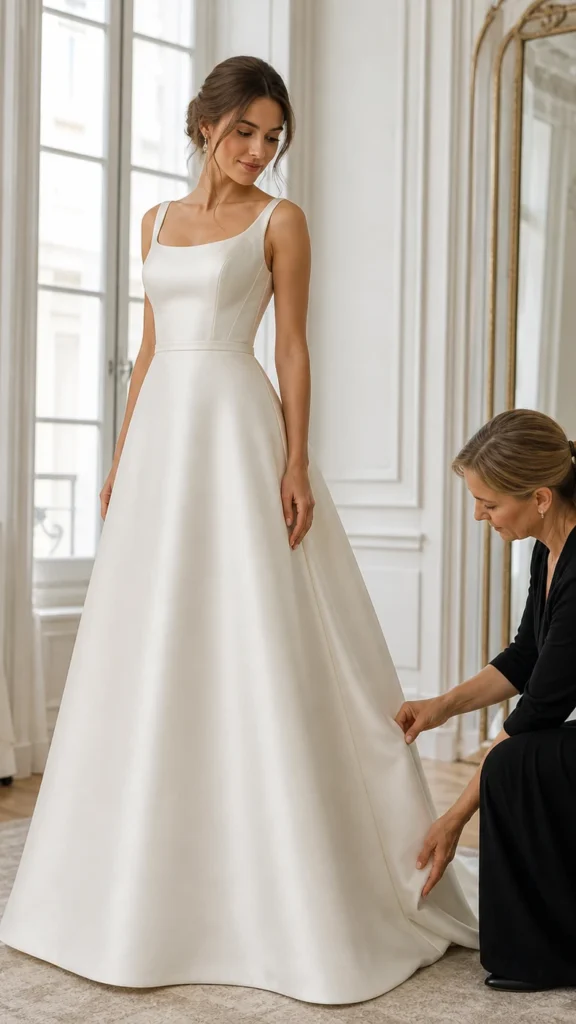
Match the veil width to the dress skirt
A narrow fitted dress does not always need a very wide veil. Too much tulle may visually overpower the silhouette or make the bride feel surrounded by fabric.
A wide ball gown or dramatic train can support more fullness. The veil should either frame the skirt confidently or fall in a deliberately narrow line rather than appearing accidentally undersized.
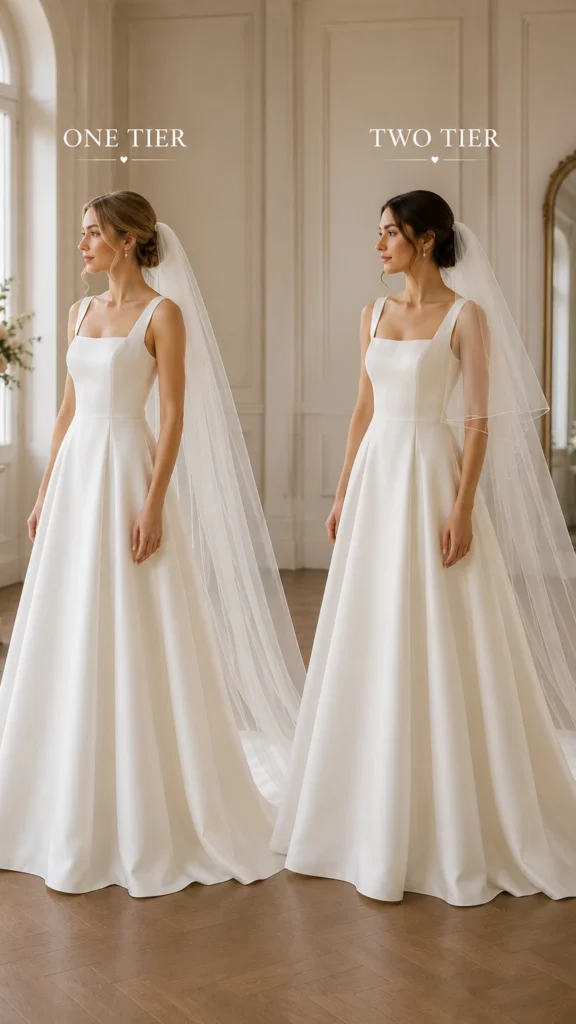
Does a blusher change the fullness?
Yes. A two-tier veil includes an additional front layer, so it naturally contains more fabric than a comparable one-tier design.
If you want a blusher but prefer less crown volume, choose softer tulle, moderate gathering or a narrower base. If you want a traditional and fuller ceremony silhouette, a wide two-tier veil can create a stronger effect.
Which cathedral veil width should you choose?
Choose a narrow cathedral veil for a modern column shape and maximum dress visibility. Choose medium width for romantic movement and balanced coverage. Choose full width when the veil train should become one of the main visual elements of the ceremony.
Also consider the wedding aisle and venue. A wide veil needs enough clean floor space to spread safely and photograph well.

Check these details before ordering
Confirm the veil width, length, number of layers, gathering, tulle softness, edge finish and comb attachment. Do not assume that every cathedral veil has the same fullness simply because the listed length is identical.
Explore the bridal veil collection at WonderBridalAtelier and compare different lengths, floral details, lace finishes and ceremony styles before ordering.
Final tip
The best wedding veil width should balance your dress rather than compete with it. Narrow width creates clarity, medium width creates versatility and full width creates ceremony drama.
At WonderBridalAtelier, thoughtful veil proportions help the dress, hairstyle and veil train feel like one complete bridal look.



Leave a comment