
Learning how to wear a wedding veil is not only about placing a comb into the hair. The height, angle and attachment point affect how the veil frames your face, balances your dress and moves during the ceremony.
The best placement should look intentional from the front, side and back while remaining secure enough for walking, hugging and photographs.

How to wear a wedding veil correctly
Begin with the complete bridal look rather than choosing the veil position separately. Put on the dress, create the planned hairstyle and then test the veil at different heights.
A higher placement creates more volume around the crown and makes the veil visible from the front. A lower position creates a softer, more streamlined fall and keeps more attention on the hairstyle and neckline.
Wedding veil above a low bun
Placing the comb directly above a low bun is one of the most secure and versatile options. The bun gives the comb a stable base, while the veil falls over or around the hairstyle.
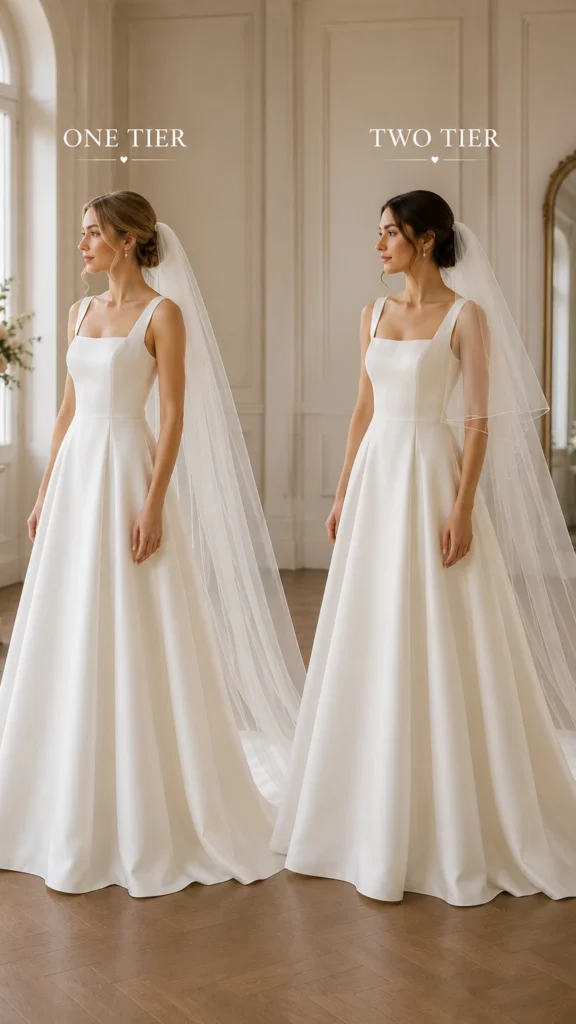
This position creates visible fullness and works beautifully with traditional, two-tier and cathedral veils. It is also useful when the bride wants a blusher because the front layer can move over the hairstyle more easily.
Wedding veil under a low bun
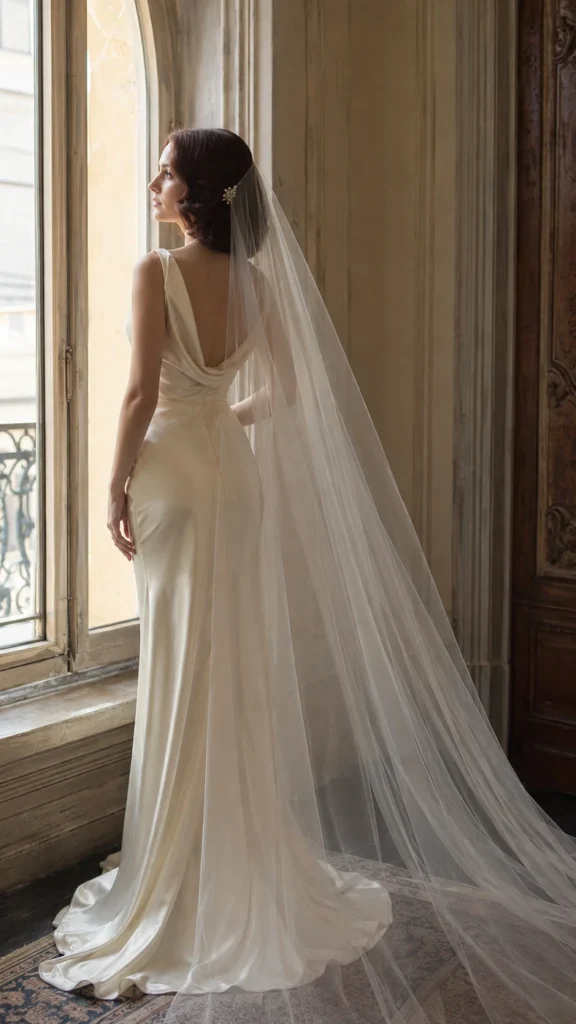
A veil placed underneath the bun creates a cleaner and more modern silhouette. The hairstyle remains completely visible, and the tulle begins lower on the head.
This placement works especially well with open-back dresses, fitted gowns and minimalist veils. However, it may not work with every blusher because the front layer must still travel comfortably over the bun and face.
How to wear a wedding veil with hair down
Loose hair does not always provide enough resistance for a veil comb. Ask the hairstylist to create a small hidden anchor using crossed bobby pins, discreet braids or lightly teased hair.
Half-up hairstyles are particularly practical because the secured section creates a natural place for the comb while the remaining hair stays soft and flowing.
For smooth Hollywood waves or straight hair, test the veil carefully during the hair trial. The comb should not gradually slide downward as you walk.
Where to place a veil with short hair
Short hair can support a veil with small loops, hidden pins, a narrow headband or a lightweight comb secured into a textured section.
Birdcage, fingertip, Juliet cap and lightweight drop veils can work particularly well because they do not require a large hairstyle to balance them.
How to secure a wedding veil comb
Insert the comb with its curved side following the shape of the head and its teeth pointing downward into the hairstyle. The comb should sit close to the scalp rather than floating above the hair.
Your hairstylist can place bobby pins across the comb teeth for additional security. Long or heavily decorated veils may require a stronger anchor than a light fingertip veil.
Test the attachment by turning your head, walking and sitting. The veil should remain stable without pulling or creating pressure.
How to wear a cathedral veil
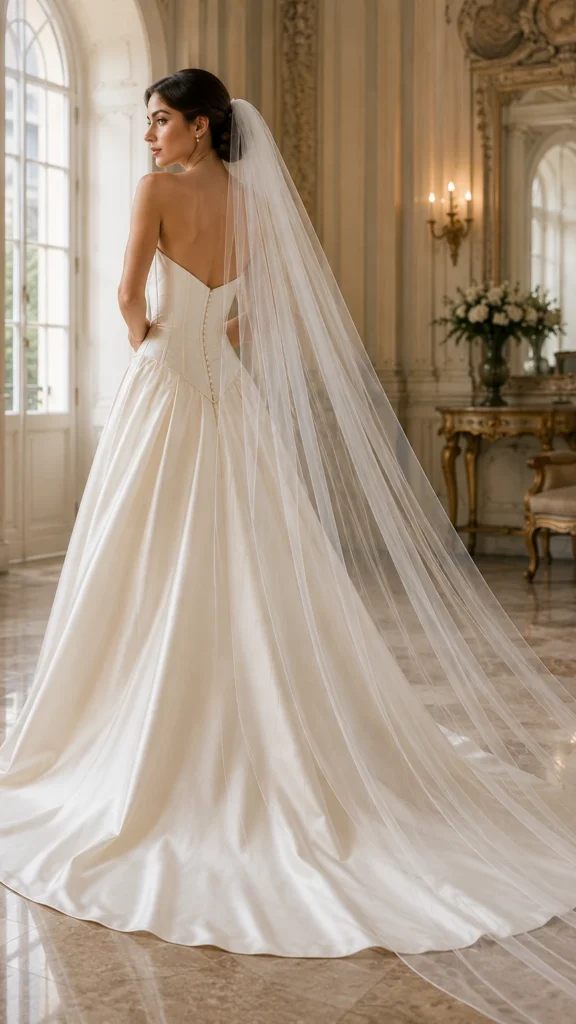
A cathedral veil needs secure placement because the long fabric creates more movement and may be stepped on. Position the comb where the hairstyle can support the veil’s weight without changing its shape.
Before walking down the aisle, ask a bridesmaid or planner to spread the veil evenly and align its centre with the back of the dress.
When choosing the length, compare it with the dress train. Long veils generally look most intentional when they extend clearly beyond the gown rather than finishing only slightly after it.
Should the veil cover the face?
A two-tier veil can include a shorter front layer called a blusher. It may remain over the face during the processional and be lifted before the vows, rings or first kiss.
Practise the movement with the actual hairstyle, earrings and veil comb. The front layer should lift smoothly without pulling the attachment forward.

Complete a bridal look with the right veil
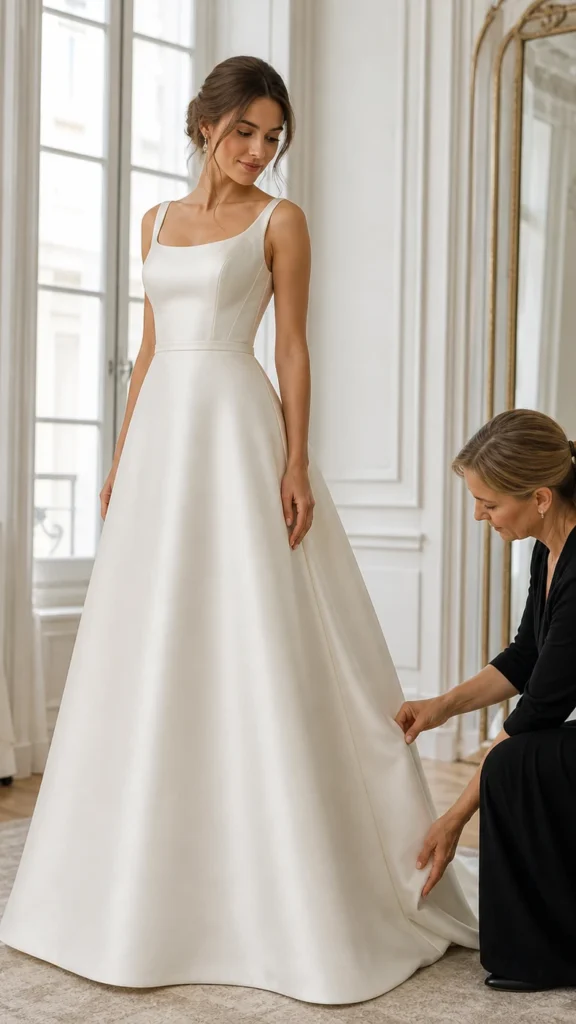
The right placement cannot compensate for the wrong veil construction. Before buying, confirm the length, number of layers, gathering, edge, color and attachment.
Explore the bridal veil collection from WonderBridalAtelier to compare soft minimalist veils, romantic two-tier designs and long cathedral styles for different dresses and hairstyles.
Final tip
Bring your veil to the hair trial instead of deciding the placement on the wedding morning. Photograph each option from the front, side and back, then test it while moving naturally.
At WonderBridalAtelier, the best way to learn how to wear a wedding veil is to test the placement with your actual hairstyle. It should feel secure, complement the dress and move beautifully. For bridal-veil history, explore the Victoria and Albert Museum.



Leave a comment