
Few bridal accessories change the ceremony entrance as completely as a cathedral veil. As the bride begins her walk down the aisle, the long tulle follows behind the dress, adds movement and creates a graceful frame around the entire bridal look.
In the United States, the path leading to the ceremony altar is called the wedding aisle. The bride’s entrance is commonly described as the bridal processional or simply the walk down the aisle.

Why a cathedral veil looks so beautiful on the wedding aisle
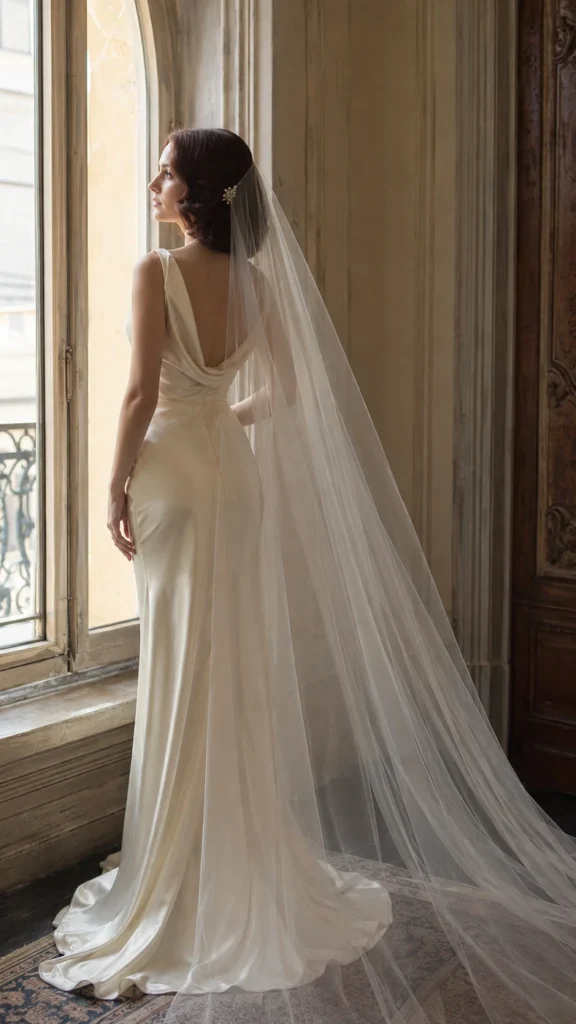
A long veil visually extends the bridal silhouette. Instead of the dress ending at the train, the soft tulle continues behind it and creates a longer, lighter line.
The veil also responds to movement. As the bride walks, the tulle gently lifts, settles and changes shape. This makes the entrance feel more alive and creates natural variation between photographs.
In a wide church, ballroom or outdoor ceremony, a cathedral veil can also help the bride remain visually prominent within a large space.
Cathedral veil, veil train or dress train?
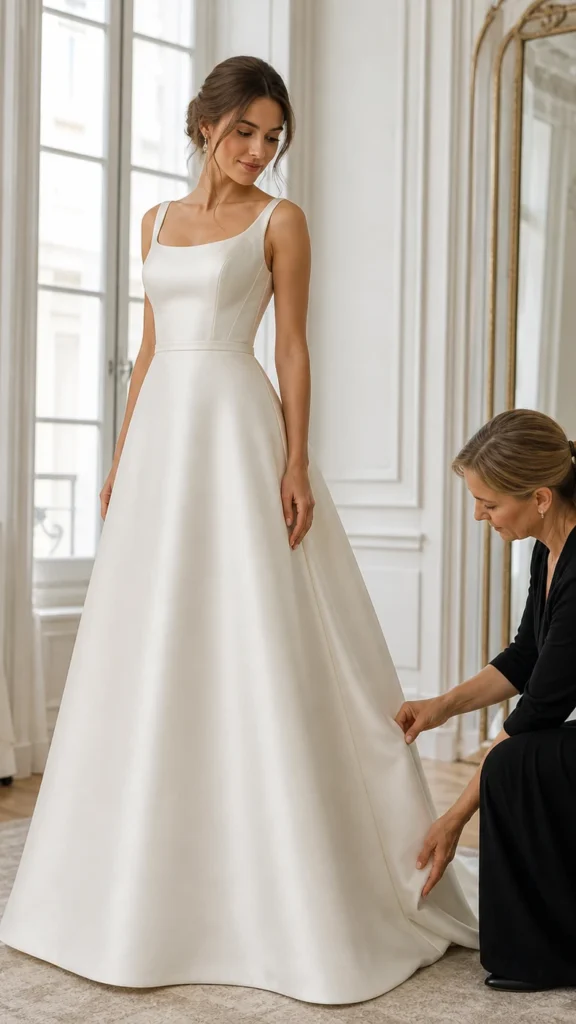
These terms describe different parts of the bridal look. A dress train is the fabric extending from the back of the wedding gown. A cathedral veil is a long veil that usually extends beyond the dress train.
Brides and photographers may informally call the section trailing behind the bride a veil train. For product titles and SEO in the United States, cathedral veil and cathedral-length veil are clearer and more commonly understood terms.
How long should a cathedral-length veil be?
Cathedral veils are commonly around 108 to 120 inches long, although longer custom and royal-length versions are also available.
The ideal length depends on the dress train and the amount of drama you want. For balanced proportions, the veil should extend clearly beyond the hem or train rather than ending only a few inches after it.
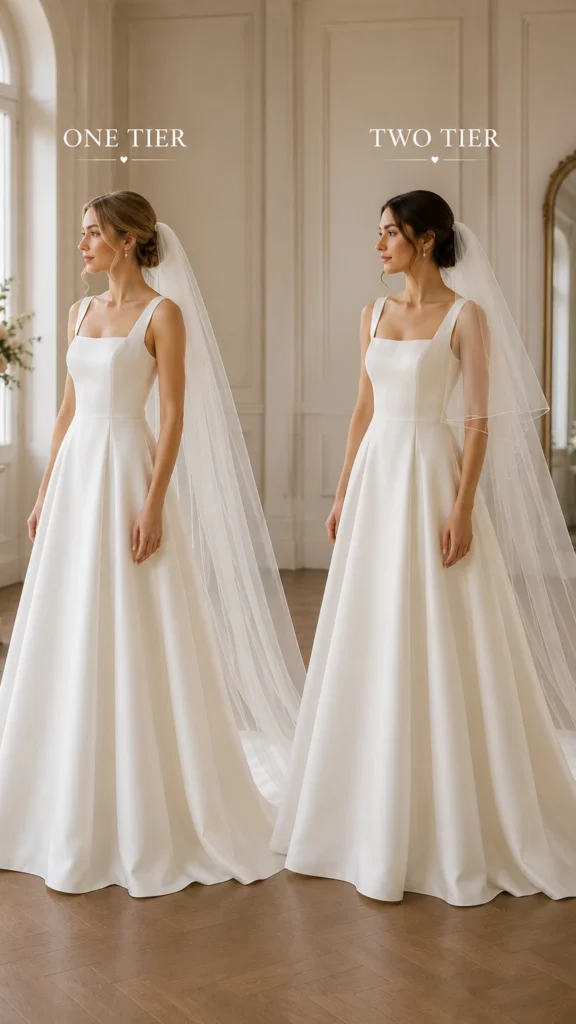
A chapel veil creates a similar flowing effect with less fabric, while a royal-length veil produces a much larger statement.
How the long veil frames the wedding dress
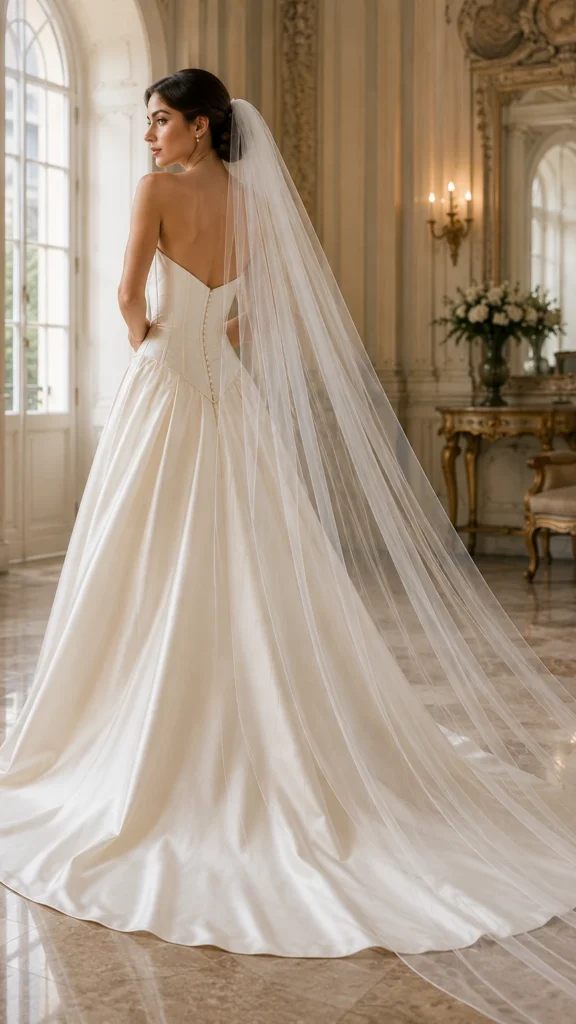
A sheer cathedral veil can soften a structured satin gown without hiding its shape. It can also frame lace, buttons or an open back while allowing those details to remain visible through the tulle.
If the wedding dress is highly decorated, a plain or lightly edged veil often creates the most balanced result. A minimalist gown can carry more visible details, such as pearls, floral embroidery, lace or a satin edge.
Prepare the cathedral veil before walking down the aisle
Ask a bridesmaid, planner or stylist to spread the veil immediately before the processional. The centre should fall directly behind the bride, and both sides should feel balanced.
Walk slowly enough for the fabric to follow naturally. A cathedral veil does not need an exaggerated pose or dramatic movement to look beautiful.
If the ceremony is outdoors, test how the veil behaves in wind. Discreet veil weights may help, although they should be light enough to preserve natural movement.
Best photographs with a long wedding veil
A photograph from behind can capture the full veil train and the symmetry of the wedding aisle. A side angle shows the movement of the fabric, while a wider photograph reveals how the veil connects the bride to the ceremony space.
Ask the photographer to capture the veil before guests step onto it or move it after the processional. It is also helpful to pause briefly after reaching the altar so the tulle has time to settle.
What to do with the veil after the ceremony
Many brides keep a cathedral veil on for portraits and remove it before dinner or dancing. Long tulle can be stepped on in crowded spaces and may pull against the hairstyle.
Ask someone to learn how the comb is attached so the veil can be removed without disturbing the hair.

Final tip
Choose a cathedral veil when you want the bridal entrance to feel larger, softer and more memorable. The veil should complement the dress train, move comfortably and remain secure throughout the ceremony.
At WonderBridalAtelier, a long veil is not simply extra fabric behind the bride. It is part of the movement, emotion and visual story of her walk down the aisle.



Leave a comment